ProMapRanker
Local SEO Glossary: A Complete Guide

Welcome to the definitive guide to local SEO terminology, brought to you by Md Shihab Mia, founder of ProMapRanker. A local SEO glossary is an essential resource defining the specialized terms, acronyms, and concepts crucial for businesses aiming to improve their visibility in local search results. Understanding this vocabulary empowers business owners and marketers to effectively optimize their online presence, interpret performance data, and implement strategies that attract nearby customers via platforms like Google Maps and Google Search. This comprehensive guide will equip you with the knowledge to navigate the local search landscape with confidence and precision.
What is Local SEO and Why Does Terminology Matter?
Local SEO is the practice of optimizing a business's online presence to rank higher in local search results, particularly on Google Maps and localized Google Search queries. Mastering its specific terminology is vital because it enables precise communication, accurate strategy development, and effective analysis of local search performance, differentiating it from broader organic SEO.
Unlike traditional SEO, which focuses on national or global reach, local SEO targets customers within a specific geographic area. This hyper-local focus involves a unique set of ranking factors and optimization techniques that require a specialized vocabulary. Without a clear understanding of terms like "Map Pack," "Geo-Grid," or "NAP Consistency," businesses risk misinterpreting data, implementing ineffective strategies, and ultimately failing to connect with their most valuable local audience. A robust grasp of this glossary is the foundation for any successful local search marketing effort.
Core Local SEO Concepts
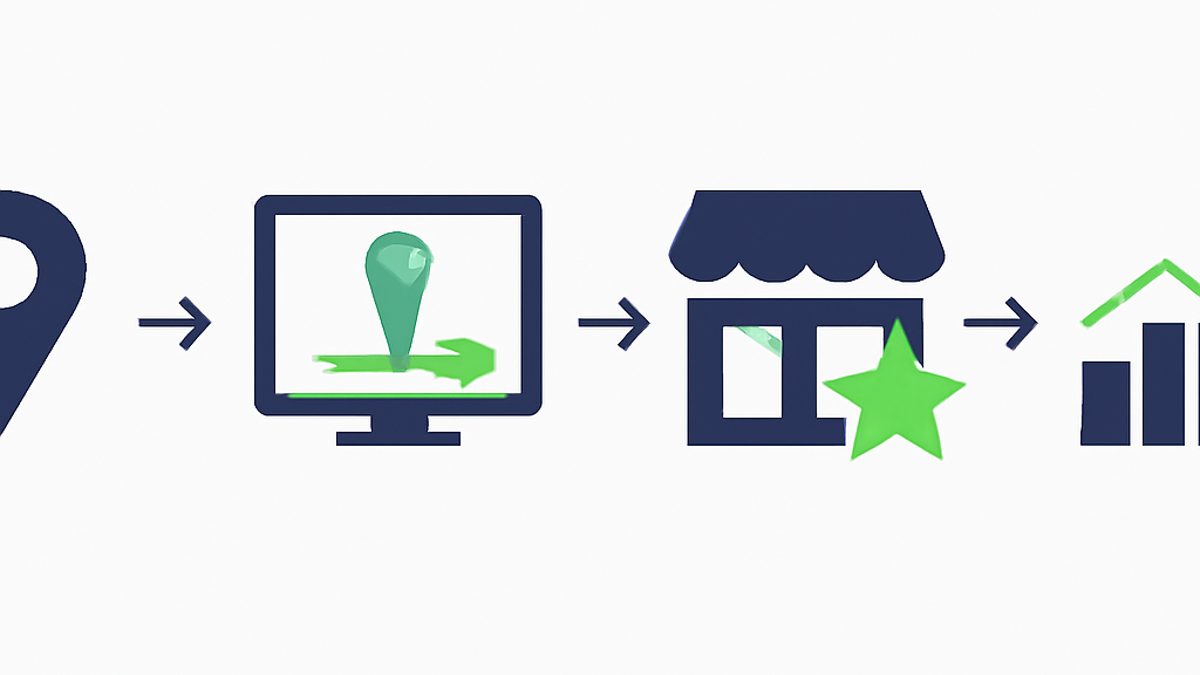
What is a Google Business Profile (GBP)?
A Google Business Profile (formerly Google My Business) is a free, web-based tool provided by Google that allows businesses to manage their online presence across Google Search and Maps. It displays critical information like business name, address, phone number, hours, and photos, acting as a direct communication channel with potential local customers.
Optimizing your GBP is arguably the single most impactful local SEO activity. A well-maintained profile enhances your visibility in the local pack and local finder, driving traffic and leads. Regularly updating information, adding photos, and engaging with reviews are crucial for maximizing its potential. For a detailed approach, explore our Google Business Profile optimization checklist.
What is the Google Map Pack?
The Google Map Pack, also known as the Local Pack or 3-Pack, is a prominent block of three local business listings that appears at the top of Google's search results for location-based queries. It includes a map, business names, addresses, phone numbers, and star ratings, providing immediate, highly visible options for searchers.
Appearing in the Map Pack is a primary goal for most local businesses because it occupies prime real estate on the SERP, often above organic results. Businesses listed here benefit from significantly increased visibility and click-through rates. Achieving Map Pack prominence requires strong GBP optimization, consistent local citations, and positive customer reviews. Learn more about optimizing for this crucial feature in our guide to Map Pack SEO.
What are Local Citations?
Local citations are mentions of a business's Name, Address, and Phone number (NAP) on other websites, typically online directories, review sites, and social media platforms. These mentions, whether linked or unlinked, help Google verify a business's existence and consistency, reinforcing its legitimacy and local relevance.
Consistent and accurate citations across numerous authoritative platforms are a fundamental local ranking factor. Inaccurate or duplicate citations can confuse search engines and dilute your local SEO efforts. Building a robust citation profile involves listing your business on top-tier directories like Yelp, Yellow Pages, and industry-specific sites. For a comprehensive list, see our article on top local citation sites.
What are Local Keywords?
Local keywords are search terms that include a geographic modifier, such as a city, neighborhood, or "near me," indicating a user's intent to find a business or service in a specific location. Examples include "plumber San Francisco," "best coffee shop near me," or "dentist downtown Austin."
Effective local keyword research involves identifying the specific terms potential customers use when searching for your products or services in your target area. Integrating these keywords naturally into your GBP, website content, and local landing pages helps search engines understand your local relevance. Discover more strategies for Google My Business keywords.
What is Proximity in Local SEO?
Proximity refers to the geographic distance between the searcher's location (or the location specified in their query) and the business's physical address. It is a critical local ranking factor, as Google aims to provide the most relevant, nearby results to users.
While businesses cannot directly control their physical distance from every potential customer, optimizing for proximity involves ensuring your GBP address is accurate, your service area is clearly defined, and your website content is localized. Geo-grid rank tracking, like that offered by ProMapRanker, precisely measures your visibility from various points around your business, providing actionable insights into your proximity performance.
What are Geo-Grids?
Geo-grids are a sophisticated local rank tracking methodology that measures a business's search ranking across a predefined grid of geographic points surrounding its location. Instead of a single rank, a geo-grid scan provides a visual "heatmap" of rankings from multiple search initiation points, revealing true local visibility.
Traditional rank trackers often provide a single "average" rank, which can be misleading for local businesses due to Google's proximity bias. Geo-grids offer a granular, accurate picture of where a business ranks across its service area, highlighting areas of strength and weakness. ProMapRanker specializes in geo-grid rank tracking, offering unparalleled precision in local SEO performance measurement.
GBP Optimization & Engagement
What are GBP Categories?
GBP Categories are specific classifications that describe what your business is and what services or products it offers, helping Google understand your core offerings. You must select one primary category and can add up to nine additional secondary categories, which significantly influence which searches your business appears for.
Choosing the most accurate and specific categories is vital for local visibility. The primary category holds the most weight, so it should reflect your main business function. Incorrect or overly broad categories can lead to missed opportunities for ranking in relevant local searches. Google's GBP guidelines recommend being as precise as possible.
What are GBP Services/Products?
GBP Services and Products sections allow businesses to list specific offerings in detail, often with descriptions, prices, and links to relevant pages on their website. These sections provide additional context to potential customers and search engines about the scope of your business operations.
Populating these sections thoroughly can enhance your profile's richness and improve your chances of appearing for long-tail, service-specific queries. While not direct ranking factors, they contribute to the overall completeness and relevance of your GBP, which indirectly supports local SEO performance by improving user experience.
What are GBP Posts?
GBP Posts are short, timely updates that businesses can publish directly to their Google Business Profile, appearing on Search and Maps. They can be used to announce offers, events, new products, or general updates, providing fresh content and engaging potential customers.
Regularly publishing GBP Posts helps keep your profile active and signals to Google that your business is operational and engaged. Posts can drive direct traffic to your website or encourage calls, acting as a mini-blog within your Google listing. They typically last for seven days, so consistent updates are key.
What are GBP Reviews?
GBP Reviews are user-generated ratings and written feedback left by customers directly on a business's Google Business Profile. These reviews, including a star rating out of five, are publicly visible and significantly influence a business's reputation and local search ranking.
Reviews are a powerful ranking factor and a critical element of social proof. A high volume of positive reviews and a strong average star rating signal trustworthiness and quality to both potential customers and Google. Actively soliciting reviews and promptly responding to all feedback, positive and negative, is essential for local SEO success. Understand why Google reviews help SEO.
What is Google Local Guides?
Google Local Guides is a global community of volunteers who contribute content to Google Maps, including reviews, photos, answers to questions, and fact-checking. These contributions help make Google Maps more accurate and comprehensive for users worldwide.
While not directly affiliated with a business, Local Guides play an indirect role in local SEO by enriching business profiles with user-generated content that can influence a business's visibility and perceived credibility. Businesses benefit when Local Guides leave positive, detailed reviews and accurate information.
Local SEO Ranking Factors & Technicalities
What is Prominence (in Local SEO)?
Prominence, in the context of local SEO, refers to how well-known and established a business is in the offline world and across its online presence. This includes factors like the number of reviews, the business's overall star rating, and its organic SEO authority, among others.
Google's local ranking algorithm considers prominence as a key factor, alongside relevance and proximity. Businesses with a strong brand presence, numerous positive reviews, and a robust online backlink profile tend to rank higher. Building prominence involves consistent marketing efforts, excellent customer service, and proactive online reputation management.
What is Relevance (in Local SEO)?
Relevance in local SEO measures how well a business matches what a user is searching for, based on its GBP categories, services, website content, and other online signals. Google strives to connect searchers with the most appropriate businesses for their specific query.
To maximize relevance, businesses must ensure their Google Business Profile is fully optimized with accurate categories and services, and that their website content clearly describes their offerings using relevant local keywords. A high degree of relevance signals to Google that your business is a strong match for a user's local search intent.
What is Google's Pigeon Update?
Google's Pigeon Update was a significant algorithm change rolled out in 2014 that aimed to provide more accurate, relevant, and consistent local search results by tying them more closely to Google's traditional web search ranking signals. It effectively integrated local search with core organic search algorithms.
The Pigeon Update meant that businesses with stronger overall SEO authority (e.g., better backlinks, higher domain authority) also saw improvements in their local rankings. It emphasized the importance of traditional SEO practices for local visibility, making local SEO less distinct from organic SEO in terms of underlying quality signals.
What are Core Web Vitals (CWV)?
Core Web Vitals are a set of specific, measurable metrics introduced by Google that quantify key aspects of user experience on a webpage, including loading performance, interactivity, and visual stability. They are now a ranking factor for both desktop and mobile search results, impacting local landing pages.
The three main Core Web Vitals are Largest Contentful Paint (LCP), First Input Delay (FID, being replaced by INP), and Cumulative Layout Shift (CLS). For optimal user experience and SEO, LCP should be under 2.5 seconds, INP under 200ms, and CLS under 0.1. Improving these metrics ensures a fast, stable, and engaging experience for local searchers. Google provides detailed guidance on web.dev/vitals.
What is NAP Consistency?
NAP Consistency refers to the uniformity of a business's Name, Address, and Phone number across all online platforms, including its Google Business Profile, website, and local directories. Consistent NAP information is crucial for building trust with search engines and avoiding confusion.
Any discrepancies in NAP data, even minor ones like abbreviations or different phone formats, can negatively impact local SEO. Google uses NAP consistency as a signal to verify a business's legitimacy and accuracy. Regularly auditing and correcting NAP errors across all online mentions is a foundational local SEO task.
What is Schema Markup (LocalBusiness Schema)?
Schema Markup, specifically LocalBusiness Schema, is a type of structured data vocabulary that businesses can add to their website's HTML to help search engines better understand their information. It provides explicit details about a business, such as its name, address, phone number, hours, and accepted payment methods.
Implementing LocalBusiness Schema can enhance a business's visibility in search results by enabling rich snippets, which display additional information directly on the SERP. While not a direct ranking factor, it helps Google process information more accurately, contributing to better relevance. You can find detailed specifications on schema.org/LocalBusiness.
What are Local Backlinks?
Local backlinks are inbound links to a business's website from other locally relevant and authoritative websites, such as local news outlets, community organizations, local blogs, or other non-competing local businesses. These links signal local relevance and authority to search engines.
Acquiring high-quality local backlinks is a powerful strategy to boost a business's domain authority and local search rankings. Strategies include sponsoring local events, guest blogging on local sites, and collaborating with community partners. These links demonstrate that a business is a valued part of its local ecosystem.
What is an Organic Local Ranking?
Organic local ranking refers to a business's position in the traditional, non-map pack organic search results for a local query. While the Map Pack is highly visible, ranking well in organic local results still drives significant traffic and is influenced by both traditional SEO and local-specific signals.
Achieving a strong organic local ranking requires a well-optimized website with localized content, strong technical SEO, and a robust backlink profile. It complements Map Pack visibility, ensuring a business appears across multiple sections of the search results page, capturing a broader range of search intent.
What is a Heatmap (Local SEO)?
In local SEO, a heatmap is a visual representation generated by geo-grid rank tracking tools that shows a business's search ranking across a geographic area. Different colors on the map indicate varying rank positions, allowing businesses to quickly identify their strongest and weakest areas of local visibility.
Heatmaps are invaluable for strategizing local SEO efforts, providing clear data on where optimization is succeeding and where it needs improvement. They help businesses prioritize actions, such as targeting specific neighborhoods with localized content or adjusting GBP service areas. Learn how to use them with our heatmap action plan to prioritize.
What is Share of Local Voice (SoLV) / Average Rank Position (ARP)?
Share of Local Voice (SoLV) and Average Rank Position (ARP) are advanced metrics used in geo-grid rank tracking to quantify a business's overall local search visibility. SoLV measures a business's presence relative to competitors across a grid, while ARP provides an average rank across all scanned points.
These metrics, prominently featured in ProMapRanker, offer a holistic view of local performance beyond individual keyword ranks. SoLV helps businesses understand their competitive standing in the local market, while ARP provides a single, comprehensible number to track overall progress. For more on key performance indicators, see local SEO metrics that matter.
Local SEO Tools & Strategies
What is a Local Rank Tracker?
A local rank tracker is a specialized SEO tool that monitors a business's performance in local search results, often on a daily or weekly basis. These tools provide insights into keyword rankings, Map Pack positions, and increasingly, geo-grid performance, offering a precise view of local visibility.
Reliable local rank tracking is essential for measuring the effectiveness of local SEO strategies and identifying areas for improvement. ProMapRanker offers robust local rank tracker overview capabilities, including geo-grid scans and competitive analysis, to give businesses a clear understanding of their local search standing.
What is a Local SEO Audit?
A local SEO audit is a comprehensive evaluation of a business's online presence to identify strengths, weaknesses, and opportunities for improving local search visibility. It typically covers Google Business Profile optimization, website SEO, local citations, reviews, and competitive analysis.
Conducting regular local SEO audits helps businesses uncover hidden issues, ensure compliance with search engine guidelines, and develop data-driven strategies for growth. ProMapRanker provides a free local SEO audit tool to help businesses get started on this critical process.
What are Local Landing Pages?
Local landing pages are specific pages on a business's website designed to target customers in a particular geographic area, often a city, neighborhood, or service location. These pages are optimized with local keywords, NAP information, and unique content relevant to that specific location.
For businesses with multiple locations or those serving a broad region, creating dedicated local landing pages can significantly boost organic local rankings. Each page should provide unique, valuable content that differentiates it from other location pages and serves the specific needs of customers in that area.
What is Duplicate Listing Suppression?
Duplicate listing suppression is the process of identifying and removing or merging redundant Google Business Profile listings or inaccurate local citations for a single business. Duplicate listings can confuse search engines, split review counts, and dilute a business's local SEO authority.
Actively managing and suppressing duplicate listings is a critical maintenance task in local SEO. It ensures that all ranking signals are consolidated to a single, authoritative profile, improving overall visibility and credibility. Tools like ProMapRanker can help identify these issues.
What is a Local Falcon Alternative?
A Local Falcon alternative refers to other geo-grid local rank tracking tools that offer similar or enhanced functionalities for visualizing local search performance across a grid. These alternatives provide competitive options for businesses seeking precise, location-based ranking data.
ProMapRanker stands out as a leading Local Falcon alternative, offering advanced geo-grid scans, detailed GBP audits, and unique metrics like Share of Local Voice (SoLV) and Average Rank Position (ARP) to provide a more complete and actionable view of local search performance for agencies and businesses.
Practical Checklist: Leveraging Your Local SEO Glossary Knowledge
Now that you're armed with the essential local SEO terminology, here's a practical checklist to apply your newfound knowledge and improve your local search presence:
- Optimize Your Google Business Profile:
- Ensure your GBP is fully claimed and verified.
- Select the most accurate primary and secondary categories.
- Fill out all sections completely: hours, services, products, website, photos.
- Maintain NAP Consistency across your GBP and website.
- Monitor and Manage Reviews:
- Actively solicit new GBP Reviews from satisfied customers.
- Respond promptly and professionally to all reviews, both positive and negative.
- Encourage review generation to boost Prominence.
- Build and Maintain Local Citations:
- Audit your existing Local Citations for NAP Consistency.
- Submit your business to top-tier local directories and industry-specific sites.
- Suppress any Duplicate Listings to consolidate your authority.
- Optimize Your Website for Local SEO:
- Integrate Local Keywords naturally into your website content, meta descriptions, and title tags.
- Implement LocalBusiness Schema Markup on your website's footer or contact page.
- Ensure your website has excellent Core Web Vitals for a fast user experience.
- Create dedicated Local Landing Pages if you serve multiple locations.
- Track Your Performance with Geo-Grids:
- Utilize a Local Rank Tracker like ProMapRanker to perform regular Geo-Grid scans.
- Analyze your Heatmap to identify areas for improved Proximity.
- Monitor your Share of Local Voice (SoLV) and Average Rank Position (ARP) to gauge overall progress.
- Engage with GBP Posts:
- Regularly publish GBP Posts about offers, events, or news to keep your profile fresh.
Comparison Table: Key Local SEO Metrics
Understanding the nuances between different local ranking metrics is crucial for a comprehensive strategy. This table highlights how various tracking methods provide distinct insights into your local search performance.
| Metric/Method | Description | Primary Insight | Best Use Case | ProMapRanker Integration |
|---|---|---|---|---|
| Map Pack Rank | Your business's position within the Google Map Pack (e.g., #1, #2, #3) for a specific keyword. | Top-level visibility in highly prominent local results. | Quick overview of immediate local search success. | Yes, tracked within geo-grid scans. |
| Organic Local Rank | Your business's position in the traditional organic search results for a local query, below the Map Pack. | Website's overall local SEO authority and content relevance. | Assessing comprehensive website optimization for local intent. | Yes, tracked alongside Map Pack. |
| Geo-Grid Rank (Heatmap) | A visual representation of your business's ranking across multiple geographic points around your location. | Granular understanding of Proximity-based performance. | Identifying specific neighborhoods or areas where you rank strongly or weakly. | Core feature, providing Heatmaps and detailed data. |
| Share of Local Voice (SoLV) | A proprietary metric quantifying your business's overall visibility relative to competitors across a geo-grid. | Your competitive standing in the local market. | Strategic competitive analysis and market share understanding. | Key ProMapRanker metric for competitive insights. |