 ProMapRanker
Map Pack SEO: How to Optimize for Google's Local Pack
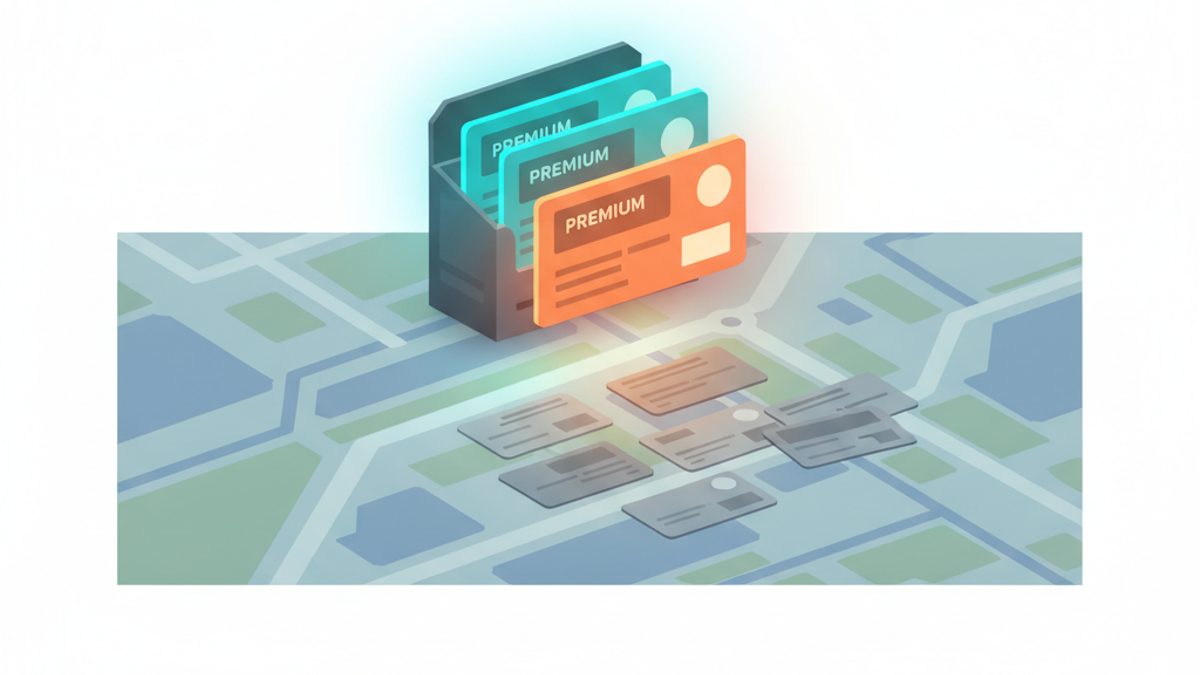
As Md Shihab Mia, founder of ProMapRanker, I've seen firsthand how critical Google's local pack is for businesses today. Map Pack SEO is the specialized optimization process that helps your business appear in the coveted "3-pack" of local search results on Google, driving immediate visibility and customer action. To optimize for Google's Local Pack, you must meticulously manage your Google Business Profile (GBP), ensure consistent online business information, cultivate strong customer reviews, and build local authority for your website. This holistic approach signals to Google that your business is relevant, prominent, and trustworthy for local searchers, directly influencing your organic traffic, calls, and foot traffic.
What is Google's Local Map Pack, and Why Does it Matter for Your Business?
Google's Local Map Pack is the prominent block of three local business listings, complete with a map, that appears at the top of Google search results for geographically-focused queries like "pizza near me" or "dentist [city name]". It matters immensely because these listings capture significant user attention, often leading to direct calls, website visits, or physical store visits without users ever scrolling further down the page.
When someone searches for a local service or product, Google prioritizes showing businesses that are immediately relevant to their location and needs. The Map Pack (sometimes called the Local 3-Pack or Snack Pack) is Google's primary way of delivering these results. Studies consistently show that businesses ranking in the Map Pack receive a disproportionately high number of clicks compared to organic results further down the page. For instance, according to an official Google statement, businesses with complete and accurate Google Business Profiles are 2.7 times more likely to be considered reputable and 70% more likely to attract local visits.
How Does Google Determine Local Pack Rankings?
Google determines local pack rankings based on three core factors: Proximity, Relevance, and Prominence. These factors are weighted differently depending on the search query, with Proximity often being the dominant factor for "near me" searches, while Relevance and Prominence play a larger role for broader local queries.
Let's break down each of these critical local pack ranking factors:
- Proximity: This refers to how close your business is to the searcher's location at the time of their query. Google uses the searcher's current location (if enabled) or the location specified in their search (e.g., "plumber in Brooklyn") to prioritize nearby businesses. While you can't change your physical location, optimizing other factors can help Google understand your service area better, even if you're not directly next door to every potential customer.
- Relevance: This measures how well your business matches what the searcher is looking for. Google assesses the keywords in your Google Business Profile, website content, and reviews to determine if your offerings align with the search query. Selecting the most accurate and specific primary and secondary categories for your GBP is crucial here, as is ensuring your services and products are clearly listed.
- Prominence: This refers to how well-known and authoritative your business is, both online and offline. Factors contributing to prominence include the quantity and quality of your online reviews, the authority of your website (based on backlinks and content), mentions on other websites (citations), and even your offline reputation. Businesses with a strong brand presence and positive sentiment tend to rank higher.
Google themselves state these three factors are key. You can read more about their perspective on improving your local ranking on Google directly from their support pages.
Step-by-Step: Optimizing Your Google Business Profile (GBP) for the Map Pack
Your Google Business Profile (GBP) is the absolute foundation of Map Pack SEO, acting as your digital storefront in local search results. A fully optimized and actively managed GBP is essential because it provides Google with the most direct and accurate information about your business, directly influencing your visibility for local queries.
Here’s a practical, step-by-step guide to supercharging your GBP:
1. Claim and Verify Your Google Business Profile
The very first step is to claim your business listing on Google and complete the verification process. This typically involves receiving a postcard with a verification code at your physical business address, a phone call, or email verification. Without verification, your profile won't be fully active, and you won't be able to manage its information.
2. Ensure Accurate and Consistent Business Information (NAP+W)
Consistency across your Name, Address, Phone number, and Website (NAP+W) is paramount. Every piece of information on your GBP must exactly match what's on your website and across all other online directories. Even slight discrepancies, like "Street" vs. "St.", can confuse Google and dilute your prominence signals.
3. Choose the Most Relevant Primary and Secondary Categories
Selecting accurate categories is one of the most impactful GBP optimizations. Your primary category should represent your core business offering (e.g., "Plumber," "Restaurant," "Dental Clinic"). Then, add as many relevant secondary categories as apply, up to the maximum allowed. Be specific and avoid general categories; for example, "Pizza Restaurant" is better than just "Restaurant."
4. Detail Your Services and Products
Utilize the "Services" and "Products" sections within your GBP dashboard to list all your offerings comprehensively. For services, provide detailed descriptions that include relevant keywords customers might use. For products, include photos, prices, and descriptions. This directly enhances your relevance for specific search queries.
5. Craft a Keyword-Rich Business Description
Write a compelling business description (up to 750 characters) that naturally incorporates your primary local keywords and unique selling propositions. Avoid keyword stuffing; instead, focus on describing what makes your business great and what services you offer, ensuring it reads well for potential customers.
6. Maintain Accurate Hours of Operation
Always keep your business hours, including special holiday hours, up-to-date. Inaccurate hours lead to poor user experience, negative reviews, and can harm your local ranking. Google often highlights businesses that are "Open now" or "Closing soon," making accurate hours a direct factor in user engagement.
7. Upload High-Quality Photos and Videos
Businesses with photos on their GBP receive more requests for directions and website clicks. Upload a variety of high-resolution images: your logo, cover photo, interior and exterior shots, photos of your team, and images of your products or services. Aim for at least 10-20 photos, updating them regularly. Consider geotagging photos before uploading to further signal your location.
8. Leverage Business Attributes
Google provides various attributes (e.g., "Wi-Fi available," "wheelchair accessible," "online appointments," "Black-owned business"). Select all attributes that accurately apply to your business. These attributes not only help you appear for specific filters but also provide valuable information to customers, improving their experience.
9. Proactively Use the Q&A Section
The "Questions & Answers" section allows users to ask questions directly on your GBP. Monitor this section diligently and answer questions promptly and accurately. You can also proactively "seed" this section by asking and answering common questions yourself, providing helpful information to potential customers and incorporating relevant keywords.
By consistently optimizing and managing these elements of your Google Business Profile, you build a strong foundation for Map Pack dominance. ProMapRanker offers a free GBP audit to help you identify areas for improvement and ensure your profile is fully optimized.
Website Optimization for Local Pack Success
While your Google Business Profile is critical, your website plays a powerful supporting role in Map Pack SEO. Google cross-references information from your GBP with your website to confirm legitimacy and relevance, making a well-optimized site essential for robust local rankings.
Here’s how to ensure your website bolsters your local pack presence:
1. Create Local Landing Pages for Services and Locations
If your business serves multiple locations or offers various distinct services, create dedicated landing pages for each. Each page should feature unique, high-quality content, including local keywords, specific location details, and unique service descriptions. For example, a plumbing company might have pages for "Emergency Plumber [City A]" and "Drain Cleaning [City B]."
2. Implement On-Page SEO with Local Keywords and Schema Markup
Integrate local keywords naturally into your website's page titles, meta descriptions, headings (H1, H2, H3), and body content. Ensure your NAP+W information is prominently displayed on every page, ideally in the footer. Crucially, implement LocalBusiness schema markup on your website. This structured data tells Google exactly what your business is, where it's located, and what it offers, making it easier for search engines to understand your local relevance.
3. Optimize for Mobile-Friendliness and Page Speed
Google uses mobile-first indexing, and local searches overwhelmingly happen on mobile devices. Your website must be fully responsive and load quickly. Aim for Core Web Vitals scores that demonstrate excellent user experience: an INP (Interaction to Next Paint) under 200ms, LCP (Largest Contentful Paint) under 2.5 seconds, and CLS (Cumulative Layout Shift) under 0.1. Slow websites frustrate users and signal a poor experience to Google, negatively impacting your overall SEO, including local.
4. Build a Strong Internal Linking Structure
A well-organized internal linking structure helps Google understand the hierarchy of your website and discover all your relevant pages. Link from your homepage to your service and location pages, and from blog posts to relevant service pages. This distributes "link juice" and reinforces the topical authority of your local content.
Building Local Authority and Trust (Off-Page SEO)
Beyond your Google Business Profile and website, building external authority and trust signals is vital for Map Pack success. These "off-page" factors tell Google that your business is prominent and reputable within its local community and industry.
1. Cultivate and Manage Online Reviews
Online reviews are arguably the most impactful prominence factor for local SEO. Focus on:
- Quantity: More reviews generally mean more prominence. Aim for a consistent flow, not just a burst.
- Quality: High star ratings (4.5+ stars) are crucial.
- Velocity: Google favors businesses that are consistently receiving new reviews, not just old ones. Aim for at least 3-5 new reviews per month for most small businesses.
- Diversity: While Google reviews are paramount, reviews on other platforms like Yelp, Facebook, and industry-specific sites also contribute to overall prominence.
- Response: Respond to every review, positive or negative. This shows engagement and care, and Google recognizes this.
For more insights, check out our guide on how to get more Google reviews.
2. Acquire Consistent Local Citations
Citations are mentions of your business's NAP+W on other websites, even without a direct link. Consistency is key here. Ensure your business information is identical across at least 20-30 high-authority online directories (e.g., Yelp, Yellow Pages, TripAdvisor, industry-specific sites, local chambers of commerce). While their direct ranking impact has evolved, citations still contribute to establishing your business's legitimacy and prominence.
Find out more about their continued relevance in our article: Do Citations Still Matter for Local SEO?
3. Earn High-Quality Local Link Building
Backlinks from authoritative and locally relevant websites still carry significant weight. Seek links from:
- Local news outlets.
- Community organizations.
- Local bloggers or influencers.
- Other non-competing local businesses you collaborate with.
- Chambers of commerce or business associations.
These links signal to Google that your business is a trusted and integrated part of the local ecosystem.
4. Engage in Local Social Signals (Indirect Impact)
While social media engagement isn't a direct local pack ranking factor, an active and engaged local social presence can indirectly contribute. It drives brand awareness, encourages user-generated content (which can lead to reviews), and may result in increased local searches for your business name, all of which can boost prominence.
Advanced Strategies for Map Pack Dominance
To truly dominate the Map Pack, you need to move beyond the basics and leverage sophisticated tools and data. This is where ProMapRanker shines, providing the insights needed to outmaneuver competitors.
1. Implement Geo-Grid Rank Tracking
Traditional rank tracking only tells you your position from a single point. Geo-grid rank tracking, like that offered by ProMapRanker, scans your rankings from multiple points across a defined geographic area (e.g., a 5x5 grid at 5 miles). This creates a heatmap visualization, revealing your true local visibility landscape. It helps identify "blind spots" where you're not ranking well, even close to your business, allowing for hyper-targeted optimization efforts.
Understand the power of this tool with our guide: What is a Geo-Grid Rank Tracker?
2. Conduct Thorough Competitor Analysis
Analyze your top-ranking local competitors. What are their GBP categories? How many reviews do they have, and what's their average rating? What keywords are they ranking for on their website? What local links do they have? ProMapRanker's competitor insights help you benchmark your performance and identify opportunities to surpass them.
3. Monitor Share of Local Voice (SoLV) and Average Rank Position (ARP)
These are advanced metrics that provide a more holistic view of your local performance.
- Share of Local Voice (SoLV): This metric, pioneered by ProMapRanker, quantifies your overall visibility within a local geo-grid. It tells you what percentage of local searches you appear for in the Map Pack, offering a true measure of your dominance.
- Average Rank Position (ARP): While traditional ARP is simple, in a geo-grid context, it provides your average ranking across all scanned points. This helps you understand if you're consistently performing well or if your rankings are sporadic.
Learn more about these crucial metrics here: Share of Local Voice Explained.
4. Leverage Generative Engine Optimization (GEO) for AI Overviews
The rise of AI Overviews and Generative Search Experiences means that local search results are evolving. Optimizing for GEO involves ensuring your GBP and website content are structured to provide direct, concise answers that AI models can easily parse and present. This includes clear FAQs, structured data, and authoritative content that explicitly answers common user questions. This is crucial for earning citations in Google's AI Overview.
Dive deeper into this emerging field with our article: Generative Engine Optimization for Local.
ProMapRanker: Your Essential Tool for Map Pack SEO
Mastering Map Pack SEO requires precision, ongoing monitoring, and deep insights. ProMapRanker (a product of rankite.com) empowers local businesses and SEO professionals with the tools to achieve and maintain Map Pack dominance.
Our platform offers:
- Geo-Grid Rank Tracking: Visualize your true local rankings with heatmaps, identifying exact areas of strength and weakness across a customizable grid (e.g., 7x7 grid at 10 miles).
- Google Business Profile Audits: Comprehensive audits to pinpoint GBP optimization opportunities, ensuring your profile is always in top shape.
- Share of Local Voice (SoLV) & Average Rank Position (ARP): Unique metrics to track your real local market share and overall performance.
- AI Ranking & Generative Engine Optimization (GEO) Tracking: Stay ahead of the curve by understanding how your business performs in AI Overviews and generative search results.
Don't guess where you stand in local search. Get the data you need to make informed decisions and climb the Map Pack rankings. Start your ProMapRanker journey today and transform your local search strategy.
The Future of Map Pack SEO: What to Expect
Map Pack SEO is a dynamic field, constantly evolving with Google's algorithm updates and new search technologies. We can anticipate several key trends:
- Increased Personalization: Local results will become even more tailored to individual user preferences, search history, and real-time context.
- AI Integration: Generative AI will play a larger role in how local information is presented, with AI Overviews potentially summarizing business information and reviews directly in search results.
- Visual Search & Augmented Reality: As visual search technologies advance, businesses with rich, high-quality images and virtual tours will gain an edge. Augmented reality experiences could also integrate local business information.
- Emphasis on User Experience: Websites with excellent Core Web Vitals, seamless mobile experiences, and strong accessibility will be increasingly favored.
Staying agile and utilizing advanced tools like ProMapRanker will be crucial to adapt to these changes and maintain your competitive edge in the local pack.
Conclusion
Optimizing for Google's Local Map Pack is no longer optional; it's a fundamental requirement for any business seeking local customers. By focusing on a meticulously optimized Google Business Profile, a robust local website, strong off-page authority signals, and advanced geo-grid tracking, you can significantly enhance your visibility and drive more leads and sales. The businesses that invest in a comprehensive Map Pack SEO strategy today will be the ones dominating local search for years to come.
Frequently Asked Questions
What is a map pack in SEO?
A map pack in SEO, also known as the Local 3-Pack, is the prominent section of Google search results that displays a map and the top three local business listings relevant to a geographically-focused search query. It's crucial for local businesses as it captures immediate user attention and drives direct customer engagement.
How important are reviews for local pack ranking?
Online reviews are extremely important for local pack ranking, serving as a primary signal of a business's prominence and trustworthiness. Google considers the quantity, quality (star rating), and velocity (frequency) of reviews, as well as business responses, to determine ranking. Businesses with numerous, high-quality, and recent reviews tend to rank higher.
What is a geo-grid rank tracker, and why do I need one?
A geo-grid rank tracker scans your business's ranking from multiple, equally spaced points across a specific geographic area, creating a visual heatmap of your local visibility. You need one because it reveals the true, nuanced landscape of your local rankings, identifying areas where you rank well and "blind spots" where you're invisible, which traditional single-point rank tracking misses.
Is SEO dead or evolving in 2026?
SEO is far from dead; it's constantly evolving. In 2026, SEO will be more sophisticated, integrating Generative AI, user experience (UX) signals, and personalized search results more deeply. Local SEO, in particular, will continue to be vital, with an increased focus on structured data, comprehensive Google Business Profile optimization, and adapting to AI-powered search overviews.
What is the 80/20 rule of SEO in a local context?
In a local SEO context, the 80/20 rule (Pareto principle) suggests that roughly 80% of your local ranking success will come from 20% of your efforts. This typically means focusing the majority of your energy on high-impact activities like thoroughly optimizing your Google Business Profile, consistently acquiring positive customer reviews, and ensuring robust NAP consistency across the web, as these deliver the most significant ROI.
How often should I audit my Google Business Profile?
You should aim to audit your Google Business Profile at least quarterly, or more frequently if you notice significant shifts in local rankings or business information changes. Regular audits ensure all information remains accurate, categories are optimal, new features are utilized, and you're responding promptly to reviews and Q&A, keeping your profile competitive.
See where you really rank - block by block
ProMapRanker scans Google Maps across a grid of your service area. Simple monthly plans from $19, white-label on every plan.
Start free