 ProMapRanker
Why Local SEO Is Important?

Local SEO is critically important because it directly connects businesses with customers searching for products or services in their immediate geographic area. It ensures your business appears prominently in Google Maps, the local pack (3-pack), and localized organic search results, driving highly qualified leads, foot traffic, and phone calls from nearby prospective buyers. For any business with a physical location or serving a specific service area, effective local SEO is the primary driver for capturing local market share and converting proximity-based searches into tangible sales. It's about being visible precisely when and where a customer needs you most.
As the founder of ProMapRanker (a product of rankite.com), I've seen countless businesses transform their local visibility through targeted strategies. It's not just about showing up; it's about dominating the local search landscape, understanding your true Share of Local Voice (SoLV), and outmaneuvering competitors in a geo-specific context.
Why is Local SEO Essential for Capturing "Near Me" Searches?
Local SEO is essential for capturing "near me" searches because a significant portion of all Google searches now include local intent or a location modifier. These searches are high-intent, indicating a user is ready to make a purchase or visit a business soon, making local visibility a direct pipeline to immediate customer acquisition.
The rise of mobile search has cemented the importance of local SEO. According to Google, "near me" searches have grown dramatically, with many leading to in-store visits or purchases within 24 hours. When someone searches for "coffee shop near me" or "plumber in [city]," they are looking for an immediate solution, and Google prioritizes businesses that are physically close, highly relevant, and prominent in their local area. Without a strong local SEO strategy, your business is invisible to this critical segment of ready-to-buy customers.
How Does Local SEO Drive Tangible Business Growth and Revenue?
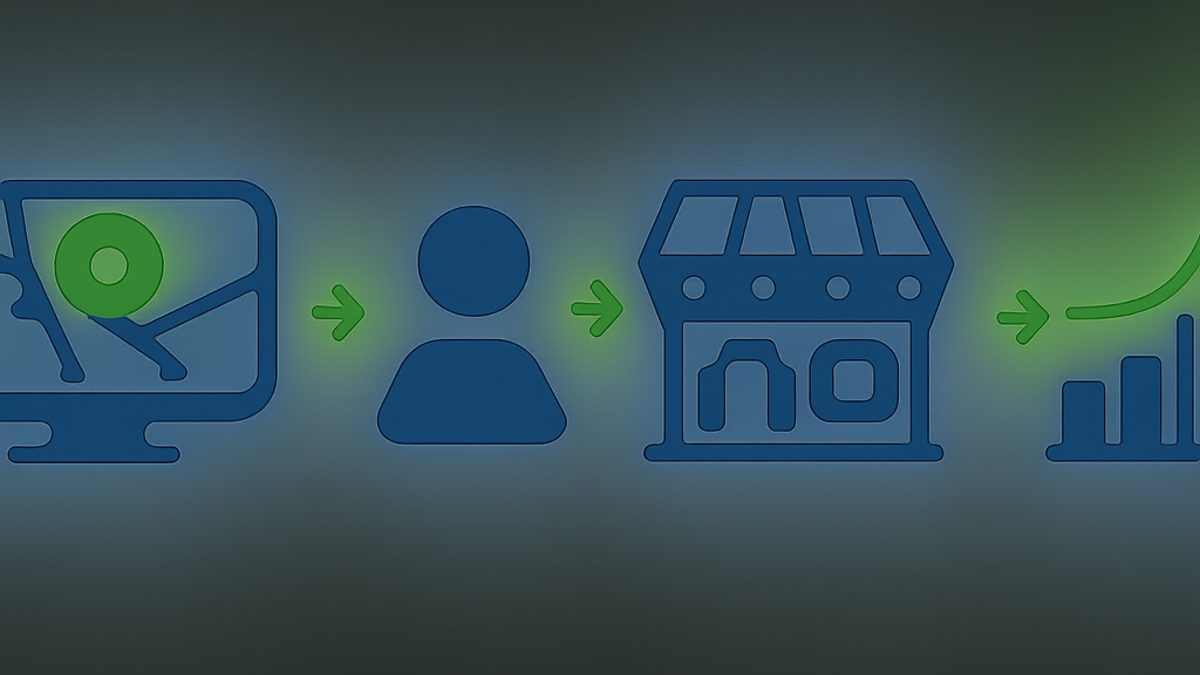
Local SEO drives tangible business growth and revenue by increasing qualified leads, boosting foot traffic, and improving conversion rates from local searchers. By ranking higher in local search results, businesses attract customers who are actively looking to buy, translating directly into sales and market expansion.
Consider a retail store or a restaurant: more visibility in the Google Maps 3-pack means more people discovering your location, viewing your hours, reading reviews, and ultimately walking through your door. For service-area businesses like contractors or consultants, appearing in local search results means more phone calls, appointment bookings, and quote requests. This isn't just about traffic; it's about relevant traffic. Users performing local searches often have a stronger intent to purchase or engage, leading to higher conversion rates compared to generic organic search traffic. Furthermore, a well-optimized Google Business Profile (GBP) acts as a powerful digital storefront, providing all the necessary information to convert a searcher into a customer before they even visit your website.
What Role Does Google Business Profile Play in Local SEO?
Google Business Profile (GBP) is the cornerstone of local SEO, acting as your business's primary digital storefront on Google Search and Maps. A fully optimized and actively managed GBP listing significantly influences your local search rankings, visibility in the local pack, and directly impacts customer engagement and trust.
Your GBP listing provides essential information such as your business name, address, phone number, website, hours of operation, services, products, and customer reviews. Google uses the accuracy and completeness of this profile as a major ranking factor. Businesses with comprehensive profiles, high-quality photos, regular posts, and consistent positive reviews tend to rank higher. ProMapRanker's GBP audit tool, for instance, helps identify optimization gaps, ensuring your profile is always competitive. Without a claimed, verified, and optimized GBP, your business is severely handicapped in local search visibility. Learn more about optimizing your profile with our Google Business Profile SEO Guide.
Can Local SEO Help Multi-Location Businesses Scale and Standardize?
Yes, local SEO is crucial for multi-location businesses, enabling them to scale their local presence consistently across all branches and service areas. It allows for standardized brand messaging, centralized reputation management, and optimized visibility in each specific geographic market, driving localized growth for every individual location.
Managing local SEO for multiple locations requires a strategic approach to ensure brand consistency while optimizing for unique local nuances. Each location needs its own optimized Google Business Profile, consistent NAP (Name, Address, Phone) data across all online directories, and a localized content strategy. Tools like ProMapRanker offer centralized dashboards to manage and monitor hundreds or thousands of locations, tracking geo-grid rankings for each branch and providing Share of Local Voice (SoLV) metrics. This ensures that every outlet performs optimally in its local market, contributing to overall brand strength and customer acquisition. For deeper insights, explore our article on Multi-Location Local SEO Strategies.
How Does Local SEO Future-Proof Your Business in an AI-Driven World?
Local SEO future-proofs your business by emphasizing verified, high-quality information and local relevance, which are paramount for AI-powered search experiences like Google's Generative Search Experience (SGE) and AI Overviews. As search evolves, AI relies heavily on authoritative, context-rich local data to provide direct answers and recommendations, making a strong local presence indispensable.
The notion that "SEO is dead" is a recurring myth; rather, it is constantly evolving. In 2026 and beyond, SEO is not dead but transforming. AI models like SGE aim to synthesize information and provide concise answers, often highlighting businesses directly. For local queries, this means AI will increasingly favor businesses with robust, accurate Google Business Profiles, a strong local citation profile, and excellent customer reviews. These are the foundational elements of local SEO. By focusing on these factors, businesses ensure they provide the structured, verified data that AI needs to recommend them, maintaining visibility and relevance in an increasingly automated search landscape. This evolution underscores the importance of E-E-A-T (Experience, Expertise, Authoritativeness, Trustworthiness) at a local level, making your business an authoritative source for local information. Dive deeper into this topic with our insights on Generative Engine Optimization (GEO) for Local.
When Do You Know Your Business Needs Local SEO?
Your business needs local SEO if you have a physical location, serve customers within a defined geographic area, or rely on foot traffic, phone calls, or appointments from local residents. If customers can visit you, or you visit them locally, local SEO is essential for your online visibility and growth.
Here are clear indicators that local SEO is not just beneficial, but necessary for your business:
- You have a physical storefront: Retail shops, restaurants, salons, clinics, etc., directly benefit from local customers finding them via Google Maps or "near me" searches.
- You serve a specific geographic area: Plumbers, electricians, landscapers, real estate agents, or home service providers operate within defined service regions. Local SEO ensures you appear when people in those areas need your services.
- Customers search for your products/services with location terms: If people frequently search for "best [product/service] in [city]" or "restaurants near me," your business needs to be visible in those results.
- You rely on word-of-mouth and referrals: A strong online local presence amplifies these effects, making it easier for referred customers to find and verify your business.
- You want to compete with local rivals: If your competitors are showing up in the local pack, and you aren't, you're losing market share.
The Core Components of a Strong Local SEO Strategy
While general SEO often discusses the "3 C's" (Content, Crawlability, Context/Clicks), local SEO prioritizes a different set of foundational elements, often summarized as Proximity, Prominence, and Relevance, as defined by Google's own local ranking factors. Alongside these, a robust local SEO strategy integrates several critical components:
1. Google Business Profile Optimization
This is the absolute bedrock. Claim and verify your GBP, then meticulously fill out every section: business name, address, phone number (NAP), website, hours, categories, services, products, description, photos, and videos. Regularly post updates, respond to reviews, and answer Q&A. Ensure your primary category is accurate and use secondary categories where relevant. ProMapRanker's audit tool can pinpoint exactly where your GBP needs improvement.
2. Local Citation Building and NAP Consistency
Local citations are mentions of your business's NAP on other websites, such as online directories (Yelp, Yellow Pages, industry-specific sites), social media profiles, and local business listings. Consistency is key: your NAP must be identical across all platforms. Inconsistent NAP data confuses search engines and can harm your local rankings. Aim for citations on 20+ relevant, high-authority directories.
3. On-Page Local SEO
Your website needs to be optimized for local search. This includes:
- Location-specific content: Create dedicated service pages or blog posts targeting specific areas you serve.
- Keywords: Integrate local keywords (e.g., "plumber [city name]") naturally into your website's titles, meta descriptions, headings, and body content.
- Schema Markup: Implement local business schema (LocalBusiness Schema) on your website to provide structured data about your business to search engines, making it easier for them to understand your local relevance.
- Mobile-Friendliness & Page Speed: Ensure your website is responsive and loads quickly on mobile devices. Google prioritizes fast, mobile-friendly sites. Aim for a Core Web Vitals LCP (Largest Contentful Paint) under 2.5 seconds and INP (Interaction to Next Paint) under 200ms, as recommended by Google's Core Web Vitals.
4. Reputation Management & Reviews
Customer reviews are a significant local ranking factor and a critical driver of trust and conversions. Actively encourage customers to leave reviews on your GBP, Yelp, and other relevant platforms. Respond to all reviews, positive and negative, demonstrating excellent customer service. Aim for a 4.5+ star rating and at least 50+ reviews, responding to at least 80% of them. Your reputation is your currency in local search.
5. Local Link Building
Acquire backlinks from other relevant local websites (e.g., local news sites, community organizations, local bloggers). These "local links" signal to Google that your business is a trusted and integrated part of the local community.
6. Geo-Grid Rank Tracking
Traditional rank tracking only tells you your position for a keyword in one spot. Local search, however, is highly dynamic based on the searcher's exact location. Geo-grid rank tracking, like that offered by ProMapRanker, allows you to monitor your rankings for specific keywords across a grid of locations (e.g., a 5x5 grid at 1, 3, or 5-mile intervals). This provides a true understanding of your local visibility and helps identify areas where you need to improve. Understand more about this with our Geo-Grid Rank Tracker Explained.
Step-by-Step: Getting Started with Local SEO
Embarking on your local SEO journey doesn't have to be overwhelming. Follow these practical steps to build a strong foundation:
- Claim and Verify Your Google Business Profile: This is step one. Go to Google Business Profile Help and follow the instructions to claim or create your listing. Verification usually involves a postcard by mail, phone call, or email.
- Completely Optimize Your GBP: Fill out every single field accurately. Select the most relevant primary business category and add up to nine secondary categories. Upload high-quality photos (logo, cover photo, interior/exterior shots, team photos). Write a compelling business description using relevant keywords.
- Ensure NAP Consistency Everywhere: Audit your existing online presence. Check your website, social media profiles, and major directories (Yelp, Facebook, local chambers of commerce) to ensure your business Name, Address, and Phone number are identical to your GBP. Correct any discrepancies immediately.
- Implement On-Page Local SEO: Review your website's content. Create location-specific pages if you serve multiple areas. Integrate local keywords into your page titles, meta descriptions, and headings. Add a Google Map embed of your location and ensure your NAP is clearly visible on your contact page and footer.
- Start Actively Soliciting and Responding to Reviews: Create a simple process for asking satisfied customers for reviews on Google. Provide a direct link. Make it a habit to respond to all reviews within 24-48 hours, whether positive or negative.
- Monitor Your Local Rankings: Use a tool like ProMapRanker to track your geo-grid rankings for your most important keywords. This will show you exactly where you stand in your service area and identify opportunities for improvement.
- Develop a Content Strategy for Local Audiences: Write blog posts or create videos that address local issues, events, or questions relevant to your target customers. This helps establish your expertise and relevance in the community.
Local SEO vs. Traditional SEO: A Comparison
While both local SEO and traditional (organic) SEO aim to improve search engine visibility, their focus, ranking factors, and immediate goals differ significantly. Understanding these differences is key to allocating your resources effectively.
| Feature | Local SEO | Traditional (Organic) SEO |
|---|---|---|
| Primary Goal | Attract customers in a specific geographic area (foot traffic, local calls/leads). | Increase website traffic, brand awareness, and conversions from a global/national audience. |
| Key Ranking Factors | Google Business Profile signals, Proximity, Prominence, Relevance, Reviews, Citations, NAP Consistency. | Keywords, Backlinks, Content Quality, Technical SEO, User Experience (UX), E-E-A-T. |
| Search Results Target | Google Maps, Local Pack (3-pack), localized organic results. | Standard organic search results (blue links). |
| Keyword Focus | Location-specific keywords (e.g., "plumber in [city]," "restaurants near me"). | Broad, non-location-specific keywords (e.g., "best project management software"). |
| Primary Tool | Google Business Profile, local citation tools, geo-grid rank trackers. | Google Search Console, Google Analytics, keyword research tools, backlink analysis tools. |
| Website Importance | Important for providing details, but GBP often acts as the initial point of contact. | Central hub for all content, information, and conversions. |
| Competition | Primarily local businesses in your immediate area. | National/global competitors. |
As you can see, local SEO is a specialized field that complements traditional SEO. For many businesses, particularly small and medium-sized enterprises (SMEs) with physical locations or local service areas, local SEO offers a much faster and more direct path to customer acquisition and revenue generation.
Frequently Asked Questions
What are the benefits of local SEO?
The benefits of local SEO include increased visibility in local search results, higher foot traffic to physical locations, more qualified leads and phone calls, improved conversion rates from high-intent local searchers, enhanced brand trust through positive reviews, and a significant competitive advantage over businesses neglecting their local online presence.
What are the 3 C's of SEO?
While general SEO often discusses the "3 C's" as Content, Crawlability, and Context/Clicks, local SEO has its own distinct set of core principles. For local search, the key ranking factors are often summarized as Proximity (how close the business is to the searcher), Prominence (how well-known and authoritative the business is), and Relevance (how well the business matches the search query). These three elements, combined with a strong Google Business Profile, drive local visibility.
Is SEO dead or evolving in 2026?
SEO is not dead; it is continuously evolving, especially with the rise of AI-powered search experiences and generative AI. In 2026, SEO strategies must adapt to focus more on E-E-A-T (Experience, Expertise, Authoritativeness, Trustworthiness), providing structured data, and optimizing for direct answers and recommendations that AI models prioritize. Local SEO, in particular, remains critical as AI relies on verified local information to provide relevant suggestions.
How do you know if you need local SEO?
You need local SEO if your business has a physical storefront, serves customers within a specific geographic area, or depends on local clients for sales and appointments. If customers can visit your location, or you travel to serve clients locally, local SEO is essential for being discovered by nearby searchers and driving relevant business growth.
Local SEO is not just another marketing tactic; it's a fundamental requirement for any business that serves a local customer base. In an increasingly digital and mobile-first world, your ability to connect with customers searching for you "near me" directly impacts your bottom line. By mastering local SEO, you're not just getting found; you're building a stronger, more resilient business that stands out in its community.
At ProMapRanker, we empower businesses and agencies to not just compete, but to dominate their local markets. Our geo-grid rank tracking, Google Business Profile audit tools, and Share of Local Voice (SoLV) metrics provide the insights you need to make data-driven decisions and achieve unparalleled local search visibility. Don't let your local competitors steal your market share.
Ready to see your true local search performance? Start your ProMapRanker journey today or get a Free Google Business Profile Audit to uncover your hidden local SEO opportunities!
See where you really rank - block by block
ProMapRanker scans Google Maps across a grid of your service area. Simple monthly plans from $19, white-label on every plan.
Start free