 ProMapRanker
Where Does Gemini Get Local Business Information?
As the founder of ProMapRanker, a geo-grid local rank tracker and Google Business Profile audit tool, I often get asked about how AI platforms interpret and utilize local business data. With Google's Gemini at the forefront of AI innovation, understanding its data sources is crucial for any local business aiming for visibility.
Gemini primarily sources its local business information from Google's expansive ecosystem, including Google Business Profiles (GBP), Google Maps, Google Search results, user-generated content (reviews, photos), and structured data from websites. This wealth of first-party, verified data forms the bedrock for its local recommendations and insights, ensuring a high degree of accuracy and relevance for users seeking local services or products. Gemini's strength in local context comes directly from its deep integration with Google's real-world data graph, constantly updated and cross-referenced to provide comprehensive and reliable information.
How Does Gemini Access Google Business Profile (GBP) Data?
Gemini leverages the comprehensive, verified data within Google Business Profiles as a primary source for local business information. These profiles contain essential details like business name, address, phone number, hours, services, website, and categories, all directly managed and confirmed by the business owner.
Google Business Profile serves as the single most authoritative source of information for a local business within Google's ecosystem. When a business owner claims and verifies their GBP, they are directly providing Google with foundational data. Gemini taps into this data graph to understand a business's core offerings, operational hours, and service area. Maintaining an accurate and complete GBP is paramount, as inconsistencies can lead to Gemini providing outdated or incorrect information, impacting potential customer interactions. Ensuring your Google Business Profile categories are precise is also critical for Gemini to accurately classify your business.
What Role Do Google Maps and Search Play in Gemini's Local Recommendations?
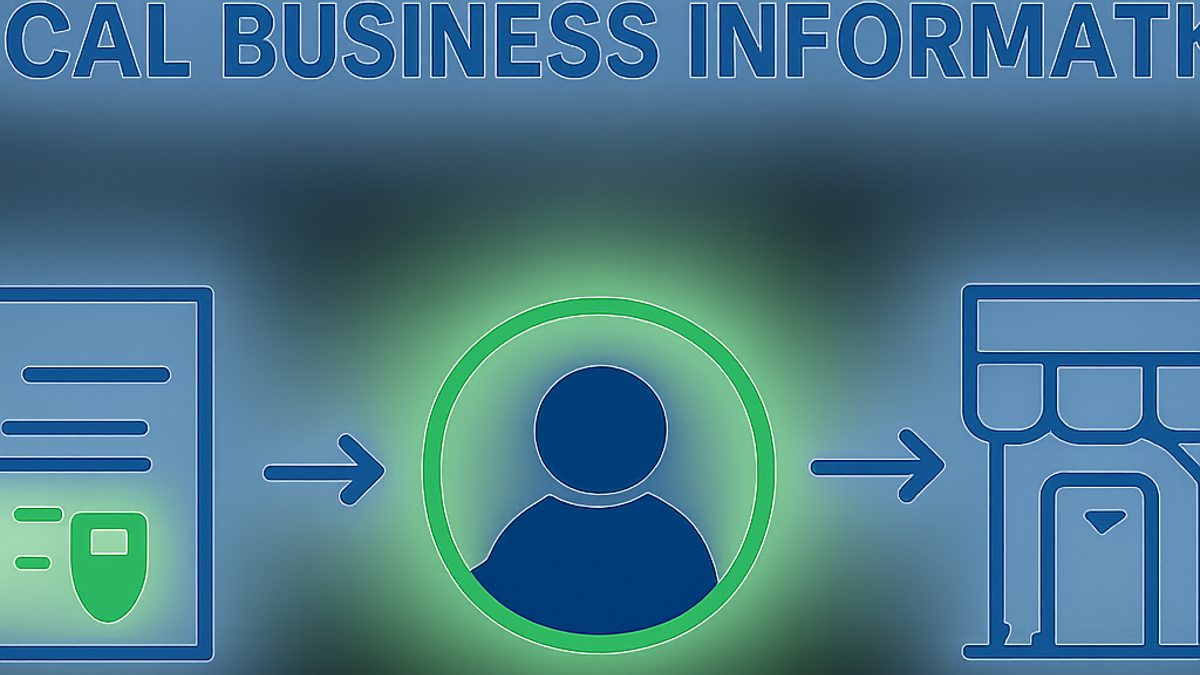
Google Maps and Search are foundational for Gemini's local recommendations, providing geographical context, real-time navigation data, and broad search result insights. These platforms offer a dynamic layer of information, including proximity to the user, traffic conditions, and the popularity of businesses based on search queries and map interactions.
Gemini's ability to offer hyper-local recommendations is deeply rooted in Google Maps. It understands spatial relationships, user location, and patterns of movement. For instance, if you ask Gemini for a coffee shop nearby, it processes your current location via Maps data, cross-references it with GBP information for coffee shops, and factors in real-time elements like traffic or opening hours. Similarly, Google Search results, particularly the local pack and organic local listings, inform Gemini about a business's overall online visibility and relevance for specific queries. Understanding how Google ranks local businesses in these contexts directly translates to how Gemini formulates its suggestions.
Does Gemini Use Real-Time or Historical Local Business Data?
Gemini utilizes a blend of both real-time and historical local business data to provide up-to-date and contextually rich information. Real-time data encompasses current open/close statuses, temporary changes, and live traffic, while historical data includes consistent business hours, long-standing reviews, and established service offerings.
This hybrid approach is essential for delivering accurate and useful responses. For example, if you ask "Is [business name] open right now?", Gemini accesses real-time GBP data to confirm current operating hours. If you ask for "the best Italian restaurant in [city]", it relies on historical data such as cumulative review scores, popularity trends, and established reputation. Businesses that consistently update their Google Business Profile for special hours, holiday closures, or temporary service changes directly feed Gemini with the necessary real-time accuracy. This ensures that the AI's recommendations are always current and reliable.
How Important Are User Reviews and Ratings for Gemini's Local Insights?
User reviews and ratings on Google Business Profiles and Google Maps are critically important, serving as social proof and qualitative data that significantly influence Gemini's local business insights and recommendations. These genuine customer experiences provide qualitative context, highlighting aspects like service quality, atmosphere, and specific product strengths.
Gemini doesn't just look at the star rating; it performs sophisticated sentiment analysis on the text within reviews. For instance, if many reviews mention "friendly staff" or "fast service," Gemini learns to associate those positive attributes with the business. Conversely, recurring negative feedback can also be identified. The volume, recency, and diversity of reviews all play a role. A business with 1,000 recent, positive reviews will likely be favored over one with 10 outdated ones, even if their average star rating is similar. Actively managing and responding to reviews, as highlighted by Google Business Profile Help, signals to both users and AI that your business is engaged and customer-focused. See Google's guidelines on responding to reviews for best practices.
Can Structured Data Influence Gemini's Understanding of Local Businesses?
Yes, structured data, particularly Schema.org markup implemented on a business's website, plays a vital role in enhancing Gemini's understanding of local businesses. This standardized format explicitly tells search engines details like business type, address, operating hours, services, and product offerings, improving data accuracy and discoverability.
While Google Business Profile is a primary source, structured data on your website provides an additional layer of clarity and authority. By using LocalBusiness schema markup, you can precisely define your business's attributes in a machine-readable format. This reduces ambiguity and helps Gemini accurately interpret your offerings, specialties, and service areas. For example, marking up your services with Service schema or your products with Product schema helps Gemini understand your complete inventory or offering, making your business more likely to be recommended for specific queries.
What Other Sources Might Gemini Consult for Local Information?
Beyond core Google properties, Gemini may consult other reputable sources to enrich its local business information, including authoritative third-party directories, industry-specific listings, and publicly available data sets. These supplementary sources help cross-validate information and fill potential data gaps, enhancing the completeness of its knowledge graph.
Google's Knowledge Graph, which Gemini draws from, is a vast repository of facts and entities. While GBP is central, Google cross-references information from numerous other sources. This includes major data aggregators, prominent local directories like Yelp or Yellow Pages, social media profiles, and even government registries. Consistency of your business's Name, Address, and Phone (NAP) across these platforms is crucial. Discrepancies can confuse AI, leading to reduced trust in your business's data. ProMapRanker helps businesses monitor their citations and NAP consistency across the web, ensuring a unified digital footprint that Gemini can confidently rely on.
How Does Gemini Verify the Accuracy of Local Business Information?
Gemini relies on Google's robust verification mechanisms, which include cross-referencing data across multiple authoritative sources, leveraging user-generated content for validation, and employing AI algorithms to detect inconsistencies or fraudulent information. This multi-layered approach ensures a high degree of data integrity for local business details.
Google has sophisticated systems in place to ensure the accuracy of local business data. For Google Business Profiles, this includes various verification methods (e.g., postcard, phone, email, video verification). Beyond initial verification, Google's algorithms continuously monitor for discrepancies by comparing information from GBP, websites, user contributions (such as "Suggest an edit" in Maps), and third-party sources. If conflicting information is found, Google may prompt businesses to re-verify or prioritize the most authoritative source. User reports of incorrect information also play a role, acting as a community-driven layer of verification that helps keep the data clean and reliable.
Key Factors for a Business to Be Recommended by Gemini
For a business to be prominently recommended by Gemini, it must exhibit comprehensive and accurate Google Business Profile data, strong relevance to user queries, excellent customer reviews, and consistent online visibility. Proximity, prominence, and relevance are the foundational pillars Google uses, and Gemini inherits these priorities.
Think of it as Google's established local ranking factors, but now filtered and interpreted by an advanced AI.
- Proximity: How close is your business to the user's location or their specified search area? Gemini prioritizes businesses that are physically convenient.
- Prominence: How well-known and authoritative is your business? This is determined by factors like review count and score, local SEO authority, internal links to your website like local link building tips, and overall online presence.
- Relevance: How well does your business match the user's search query? This comes from accurate GBP categories, services listed, website content, and reviews mentioning specific keywords.
A business that excels in all three areas, backed by a strong digital presence, is far more likely to be highlighted by Gemini.
Optimizing Your Business for Gemini's Local Recommendations: A Checklist
To ensure your local business is primed for optimal visibility and recommendations from Gemini, follow this comprehensive checklist. Each step contributes to building the robust, accurate data footprint Gemini relies on.
1. Claim & Optimize Your Google Business Profile
- Complete All Fields: Ensure your business name, address, phone number (NAP), website, hours, services, and products are fully filled out. Incomplete profiles offer less data for Gemini to work with.
- Choose Accurate Categories: Select the most specific primary category that describes your main business activity, then add relevant secondary categories. This significantly impacts relevance. For guidance, read our article on Google Business Profile categories.
- Upload High-Quality Photos and Videos: Visuals make your profile more engaging and provide Gemini with richer context about your business's appearance and offerings. Aim for at least 10-20 photos.
- Write a Compelling Business Description: Use keywords naturally to describe what your business does, its unique selling propositions, and its service area.
- Keep Hours of Operation Updated: Crucial for real-time accuracy. Always update for holidays, special events, or temporary closures.
2. Actively Manage Customer Reviews
- Encourage Reviews: Politely ask satisfied customers to leave reviews on your GBP. A consistent flow of new reviews is a strong signal of an active, thriving business.
- Respond Promptly to All Reviews: Acknowledge positive feedback and professionally address negative comments. This shows Gemini and potential customers that you value feedback and are engaged.
- Address Concerns Constructively: When responding to negative reviews, offer solutions or apologies to demonstrate good customer service.
3. Ensure NAP Consistency Across the Web
- Verify NAP Data: Your business Name, Address, and Phone number must be identical across your website, social media profiles, and all major online directories (Yelp, Facebook, Apple Maps, industry-specific sites).
- Use Consistent Formatting: Even minor differences (e.g., "St." vs. "Street") can create confusion for AI.
- Monitor Citations: Tools like ProMapRanker can help you audit and monitor your business's citations across hundreds of directories, flagging inconsistencies that need correction.
4. Optimize Your Website for Local SEO
- Implement LocalBusiness Schema Markup: Add structured data to your website to explicitly tell search engines about your business's details, services, and location. Refer to Schema.org's LocalBusiness documentation.
- Ensure Mobile-Friendliness and Speed: Your website should be responsive and load quickly. Aim for Core Web Vitals performance, such as an Interaction to Next Paint (INP) under 200ms, as outlined by web.dev/vitals.
- Create Localized Content: Develop service pages for specific neighborhoods, blog posts about local events, or case studies featuring local clients. This strengthens your geographic relevance.
- Build High-Quality Local Backlinks: Secure links from other reputable local businesses, community organizations, or local news sites. See our local link building tips for strategies.
5. Engage with Google Posts and Q&A
- Regularly Use Google Posts: Share updates, offers, events, or new products directly on your Google Business Profile. These posts appear in your GBP and can influence Gemini's perception of your business's activity.
- Monitor and Answer Q&A: Respond to questions asked by users in your GBP's Q&A section. You can also proactively add frequently asked questions and their answers.
6. Monitor Your Local Search Performance
- Utilize Geo-Grid Rank Tracking: Tools like ProMapRanker allow you to see exactly how your business ranks on Google Maps across a defined service area, for example, a 5x5 grid at 1-mile increments. This reveals your true local visibility. Learn more about how to track local rankings effectively.
- Track Key Metrics: Monitor your Share of Local Voice (SoLV) and Average Rank Position (ARP) to understand your competitive standing. ProMapRanker provides these insights, helping you identify areas for improvement.
- Conduct Regular GBP Audits: Use an automated GBP audit tool (like ProMapRanker's) to identify missing information, inconsistent data, or optimization opportunities that Gemini will value.
By diligently implementing these strategies, you are not only optimizing for Google's traditional local search algorithms but also directly feeding Gemini with the high-quality, verified data it needs to recommend your business confidently. ProMapRanker is designed to give you the competitive edge in this evolving landscape, providing the tools to track, audit, and improve your local presence. Start your free trial today and see how our geo-grid scans and GBP audit can transform your local visibility.
Comparison: Gemini vs. ChatGPT for Local Business Data
While both Gemini and ChatGPT are powerful AI models, their core strengths and access to local business information differ significantly, primarily due to their underlying data sources and integrations.
| Feature / Aspect | Google Gemini (via Google AI) | ChatGPT (OpenAI) |
|---|---|---|
| Primary Data Source | Google's Knowledge Graph, Google Business Profiles (GBP), Google Maps, Google Search, user reviews, structured web data. | Vast web crawl data, training datasets (up to specific cutoff), user-provided context. |
| Local Accuracy | High, leverages verified, real-time Google data, highly reliable for local info. | Variable, dependent on training data currency and prevalence of information on the web. Can be outdated. |
| Real-Time Data | Yes, natively integrated with live Google services (Maps, GBP updates). | Limited, relies on the last training update; may access real-time via plugins/browsing if enabled, but not natively for local data. |
| Geographical Context | Strong, natively understands location, proximity, and spatial relationships. | Weak, relies heavily on explicit user input for location; lacks native geo-spatial reasoning. |
| Verification | Robust, multi-layered Google verification processes for businesses and data. | Implicit, based on data prevalence and consensus in training set; no direct verification of local businesses. |
| Recommendations | Highly relevant, personalized based on Google's understanding of user intent and local context. | Generic, based on patterns in training data; less tailored to real-time local conditions or specific verified businesses. |
Frequently Asked Questions
Is Gemini an Indian company?
No, Gemini is a product of Google, an American multinational technology company. Google's headquarters are located in Mountain View, California, United States, where much of the development for its AI initiatives, including Gemini, takes place.
Is ChatGPT or Gemini better for business?
For local business information, recommendations, and leveraging real-time local data, Gemini generally holds a significant advantage. Its direct integration with Google's vast, verified local data ecosystem (Google Business Profiles, Maps, Search) makes it superior for tasks requiring accurate, up-to-date local context. ChatGPT, while powerful for general language tasks, relies on its training data and lacks native real-time access to Google's specific local business graph.
What does Gemini do for business?
Gemini assists businesses by providing powerful AI capabilities for a wide range of tasks. This includes generating content, performing data analysis, facilitating customer support interactions, and offering informed local recommendations. For local businesses, specifically, Gemini can provide insights into customer behavior, market trends, and help craft targeted marketing messages, all powered by its deep access to Google's verified local data.
Where is Gemini headquarters located?
Gemini's development is spearheaded by Google. Therefore, its primary operational and development headquarters are situated at Google's main campus at 1600 Amphitheatre Parkway, Mountain View, California, USA.
Understanding where Gemini gets its local business information empowers you to optimize your digital presence effectively. By focusing on a complete, accurate, and engaging Google Business Profile, fostering positive customer reviews, and ensuring consistent online data, you're not just improving your local SEO; you're directly influencing how Google's cutting-edge AI recommends your business to the world. ProMapRanker is here to help you navigate this landscape, providing the tools you need to track your performance, audit your GBP, and dominate your local market. Get a free GBP audit today and start making your business shine in the AI era.
See where you really rank - block by block
ProMapRanker scans Google Maps across a grid of your service area. Simple monthly plans from $19, white-label on every plan.
Start free