 ProMapRanker
Local SEO for Dentists: A Patient-Generating Playbook

As Md Shihab Mia, founder of ProMapRanker, I understand the unique challenges dental practices face in attracting new patients. In a competitive market, simply being a great dentist isn't enough; you need to be found where patients are searching. This playbook will equip you with the advanced strategies to dominate local search results and fill your appointment book.
What is Local SEO for Dentists and Why is it Essential for Patient Generation?
Local SEO for dentists is the process of optimizing your dental practice's online presence to rank higher in local search results, particularly on Google Maps and the local pack. This strategy is essential because it targets prospective patients actively searching for dental services in their immediate vicinity, directly converting local search queries into new patient appointments.
Unlike broad SEO, local SEO focuses on geographical relevance. When someone types "dentist near me" or "emergency dental care [city name]" into Google, they are looking for immediate solutions. Your goal is to be the first, most trusted option they see. For dentists, this means optimizing your Google Business Profile (GBP), accumulating positive patient reviews, ensuring consistent business information across online directories, and having a mobile-friendly, well-optimized website. Effectively implemented, a robust local SEO strategy dramatically increases your visibility to the right audience, driving calls and website visits that translate directly into new patients for your practice.
Why is Local SEO a Game-Changer for Dental Practices?
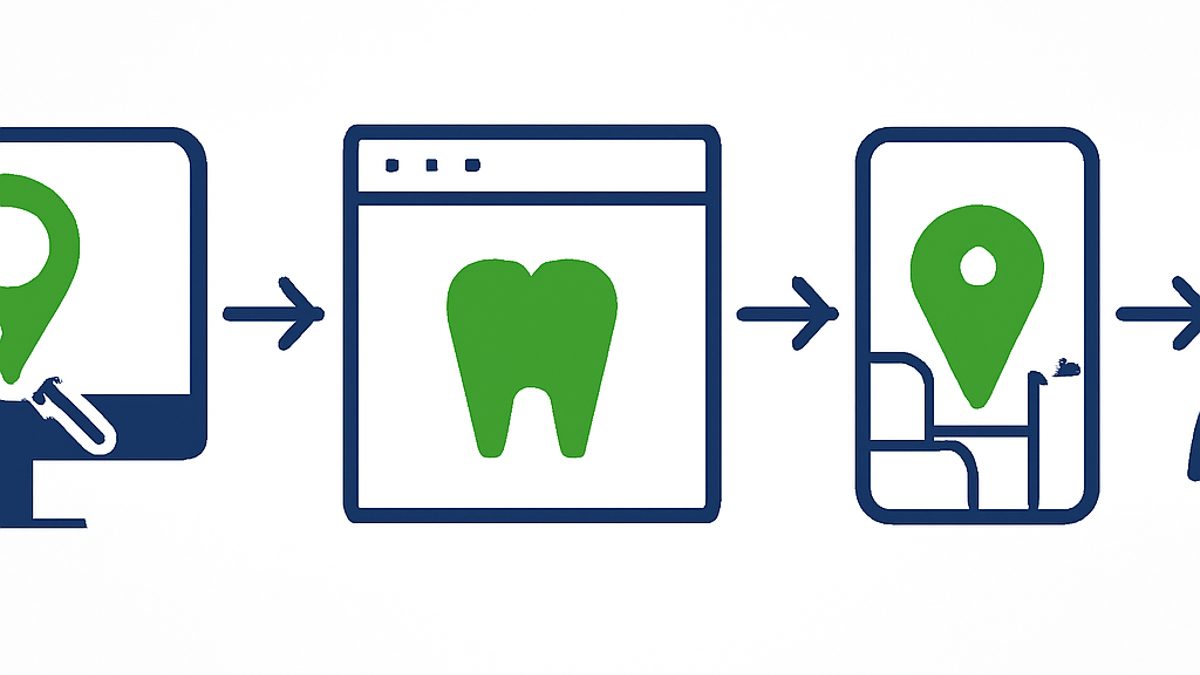
Local SEO is a game-changer for dental practices because it directly connects you with patients who are ready to book an appointment. It focuses your marketing efforts on individuals in your service area actively seeking dental care, leading to higher conversion rates and a stronger patient base.
Consider this: a potential patient with a toothache isn't searching for a dentist across the country; they're looking for one nearby, right now. Data from Google shows that 46% of all Google searches have a local intent. For a dental practice, this means nearly half of all relevant searches are opportunities to attract a new patient. By optimizing for local search, you ensure your practice appears prominently when these high-intent searches occur, significantly boosting your chances of acquiring new patients over competitors who neglect this crucial aspect of digital marketing. It's about being present and preferred in your community.
How Does Google Determine Local Rankings for Dentists?
Google determines local rankings for dentists primarily through three factors: relevance, distance, and prominence. Your dental practice needs to be highly relevant to the search query, geographically close to the searcher, and possess significant online authority and reputation to rank well.
Let's break these down:
- Relevance: How well your Google Business Profile and website content match what someone is searching for. If a patient searches for "pediatric dentist," your GBP and website should clearly indicate you offer pediatric dentistry services.
- Distance: How far each potential search result is from the location term used in a search (e.g., "dentist near me") or, if no location is specified, from the searcher's current location. Google prioritizes businesses closest to the searcher.
- Prominence: How well-known and authoritative your dental practice is across the web. This includes factors like the number and quality of reviews, external links to your website, how often your business is mentioned online (citations), and your overall website SEO. A practice with many positive reviews and strong website authority will typically rank higher than a less prominent one, even if slightly further away.
Mastering these three pillars is fundamental to securing top spots in the local pack and Google Maps for your dental practice.
What are the Core Pillars of a Winning Dental Local SEO Strategy?
A winning dental local SEO strategy is built upon optimizing your Google Business Profile, actively managing patient reviews, ensuring robust on-page website SEO, and building consistent local citations. Each pillar supports the others, creating a comprehensive approach to dominate local search.
Here's a deeper look into each critical component:
- Google Business Profile (GBP) Optimization: This is the cornerstone. Your GBP listing is often the first interaction potential patients have with your practice online. It needs to be 100% complete, accurate, and actively managed.
- Online Reviews and Reputation Management: Patient reviews are a powerful trust signal for both Google and prospective patients. Actively soliciting and responding to reviews significantly boosts your prominence.
- On-Page Website SEO: Your dental website must be technically sound, fast, mobile-friendly, and optimized with relevant local keywords. It acts as the ultimate authority for your GBP.
- Local Citations and Directory Listings: Consistent Name, Address, Phone Number (NAP) information across various online directories (Yelp, Healthgrades, Yellow Pages, etc.) builds trust and legitimacy for your practice.
- Local Link Building: Acquiring backlinks from other local, reputable websites strengthens your website's authority, which in turn helps your local rankings.
- User Experience (UX) and Mobile-Friendliness: A fast, easy-to-navigate website on any device keeps potential patients engaged and reduces bounce rates, signaling quality to Google.
Neglecting any of these pillars will weaken your overall local SEO performance. A holistic approach is always best for consistent patient generation.
How Can Dentists Optimize Their Google Business Profile for Maximum Visibility?
Dentists can optimize their Google Business Profile (GBP) for maximum visibility by ensuring all information is complete and accurate, selecting precise categories, uploading high-quality photos, writing compelling descriptions, and regularly posting updates. An optimized GBP is the most direct path to appearing in the local pack and Google Maps.
Here's a detailed checklist for GBP optimization:
- Claim and Verify Your Listing: This is the absolute first step. Without verification, you can't fully manage your profile.
- Complete All Sections: Fill out every single field. This includes business name, address, phone number (NAP), website, hours of operation, services offered, and accessibility attributes. Incomplete profiles are less likely to rank.
- Choose Primary and Secondary Categories Wisely: Be specific. "Dentist" is good, but "Cosmetic Dentist" or "Pediatric Dentist" can be better as a primary category if that's your specialty. Add up to 9 secondary categories to cover all your services.
- Write a Detailed Business Description: Use relevant keywords naturally, but focus on telling patients what makes your practice unique. Highlight your services, patient-centric approach, and any special technologies.
- Upload High-Quality Photos and Videos: Showcase your practice interior, exterior, team, and even patient testimonials (with consent). Businesses with photos receive more requests for directions and website clicks. Aim for at least 10-20 photos, including your logo and a cover photo.
- Use Google Posts Regularly: Share updates about new services, special offers, patient education, or team news. This keeps your profile fresh and signals to Google that you're an active business.
- Add Services with Descriptions: List all your dental services (e.g., teeth cleaning, veneers, dental implants) and provide detailed descriptions for each. Use keywords patients might search for.
- Utilize Q&A: Answer common questions about your practice. This is a great way to preemptively address patient concerns and inject more keywords.
- Monitor and Respond to Reviews: This is critical for prominence. Encourage patients to leave reviews and respond to every one, positive or negative. We'll cover this more below.
- Ensure NAP Consistency: Double-check that your Name, Address, and Phone number are identical across your GBP, website, and all other online directories. Inconsistencies confuse Google and hurt your rankings. Learn more about NAP consistency here.
For a deeper dive into maximizing your GBP, check out our guide on how to optimize GBP for local SEO. Tools like ProMapRanker's GBP audit can pinpoint exactly where your profile needs improvement, giving you actionable insights to outrank competitors.
What Role Do Patient Reviews and Online Reputation Play in Dental SEO?
Patient reviews and your online reputation are paramount in dental local SEO, acting as powerful trust signals for both Google and prospective patients. A high volume of positive reviews, coupled with prompt and professional responses, significantly boosts your practice's prominence and conversion rates.
Google heavily weighs review quantity, quality, and recency when determining local rankings. A practice with hundreds of 5-star reviews will almost always outrank a similar practice with few or negative reviews, assuming other factors are equal. Studies show that businesses with more reviews generally attract more customers. Beyond just ranking, reviews build social proof. When a potential patient sees glowing testimonials about your gentle touch, friendly staff, or effective treatments, they are far more likely to choose your practice over another. Implement a system for consistently soliciting reviews after appointments and train your staff on how to encourage them. Always respond to reviews, thanking positive reviewers and offering solutions or apologies to negative ones. This demonstrates excellent customer service and commitment to patient satisfaction, further enhancing your online reputation and local SEO.
How Can a Dentist's Website Boost Their Local Search Performance?
A dentist's website boosts local search performance by providing a robust platform for local keywords, demonstrating expertise through valuable content, and ensuring a fast, mobile-friendly user experience. It serves as the authoritative digital hub that validates and enhances your Google Business Profile's local ranking signals.
Here's how to optimize your dental website for local SEO:
- Local Keyword Integration: Naturally weave local keywords into your website's content, including your city, neighborhood, and surrounding areas. Examples: "dentist in [city name]", "dental implants [neighborhood]", "emergency dental care [county]".
- Service Pages: Create dedicated pages for each major service you offer (e.g., "Dental Cleanings in [City]", "Cosmetic Dentistry [City]", "Orthodontics [City]"). Optimize each page with relevant keywords, detailed descriptions, and calls to action.
- Location Pages: If you have multiple practice locations, create a unique, optimized page for each one. Include unique content, photos, hours, and an embedded Google Map for that specific location.
- NAP Consistency: Ensure your Name, Address, and Phone number are clearly displayed on every page of your website, ideally in the footer, and that they match your GBP exactly.
- Schema Markup: Implement local business schema markup (LocalBusiness schema.org) on your website. This structured data helps search engines understand critical information about your practice, such as services, hours, and location, leading to richer search results (rich snippets).
- Mobile-Friendliness: Your website must be responsive and load flawlessly on all devices, especially smartphones. Google uses mobile-first indexing, and a poor mobile experience will hurt your rankings.
- Website Speed: Page load speed is a critical ranking factor and user experience element. Aim for Core Web Vitals scores like INP (Interaction to Next Paint) under 200ms and LCP (Largest Contentful Paint) under 2.5 seconds. Use tools like Google PageSpeed Insights to identify and fix issues.
- High-Quality Content: Publish blog posts and articles on dental health topics relevant to your local community. This establishes your expertise and provides more opportunities for local keyword targeting.
- Internal and External Linking: Link relevant pages within your website and acquire backlinks from other reputable local businesses or health organizations.
A well-optimized website is not just a digital brochure; it's a powerful SEO asset that reinforces your local presence and authority. It's often the second stop for a patient after finding you on Google Maps, so it needs to be impressive and informative.
Why are Local Citations and Directory Listings Crucial for Dentists?
Local citations and directory listings are crucial for dentists because they reinforce your practice's legitimacy and consistency across the web, building trust with Google and improving local search rankings. Each citation acts as a vote of confidence, signaling to search engines that your business information is accurate and reliable.
A local citation is any online mention of your dental practice's Name, Address, and Phone number (NAP), even without a link back to your website. These can appear on business directories (Yelp, Healthgrades, Zocdoc, Yellow Pages), social media profiles, local chamber of commerce sites, and industry-specific listings. The more consistent and numerous your citations are, the more confident Google becomes in your business's details. Inconsistencies, even minor ones (e.g., "St." versus "Street" or different phone number formats), can confuse search engines and dilute your local SEO efforts. Aim for citations on 20+ relevant directories. Regularly audit your citations for accuracy and build new ones on high-authority local and dental-specific platforms. ProMapRanker's audit tools can help you identify and correct NAP inconsistencies quickly, which is vital for improving your local authority. For more details on building this crucial foundation, explore our guide on citation building for local SEO.
How Do Geo-Grid Rank Tracking and Audits Revolutionize Dental Local SEO?
Geo-grid rank tracking and comprehensive audits revolutionize dental local SEO by providing hyper-localized, granular insights into your practice's visibility across specific geographic areas. This data-driven approach allows you to precisely identify ranking strengths and weaknesses, informing highly targeted optimization strategies that generic rank trackers miss.
Traditional rank tracking often gives you a single "average" ranking for a broad area, which is insufficient for local businesses like dental practices. ProMapRanker's geo-grid technology, for example, scans your rankings for specific keywords (like "dentist [service]") across a customizable grid of points around your practice, such as a 5x5 grid at 5-mile intervals. This generates a visual heatmap showing exactly where your practice ranks well and where it's invisible on Google Maps. You might discover you rank #1 directly at your office but drop to #15 just 3 miles away. This insight is gold. It tells you exactly which neighborhoods need more focused GBP optimization, review generation, or localized content. Furthermore, ProMapRanker's SoLV (Share of Local Voice) and ARP (Average Rank Position) metrics provide competitive benchmarking, showing how your local visibility compares to competitors. Our Google Business Profile audit tool goes even deeper, analyzing over 100 GBP factors to reveal specific optimization opportunities. This level of detail transforms local SEO from guesswork into a precise, data-backed strategy, ensuring your patient-generating efforts are always focused on the most impactful areas. Experience this precision firsthand with a free GBP audit today.
What is a Step-by-Step Local SEO Action Plan for Dental Practices?
Implementing a structured action plan is key to consistent local SEO success for dental practices. This step-by-step guide ensures you cover all critical areas, from foundational setup to ongoing optimization and performance tracking.
Dental Local SEO Action Plan: Your Patient-Generating Checklist
- Foundation First: Google Business Profile Mastery
- Claim or gain access to your Google Business Profile.
- Verify your listing (if not already done).
- Complete every section: NAP, hours, website, services, accessibility.
- Select the most accurate primary category (e.g., "Dentist") and up to nine secondary categories.
- Write a compelling, keyword-rich business description.
- Upload at least 10-20 high-quality photos and videos (interior, exterior, team, treatments).
- Utilize Google Posts weekly for updates, offers, and patient education.
- Regularly monitor and respond to GBP Q&A.
- Website Optimization for Local Authority
- Ensure NAP consistency across your website, matching your GBP exactly.
- Create dedicated, locally optimized service pages (e.g., "Dental Implants in [City]").
- Implement local business schema markup on your homepage and location pages.
- Optimize website for mobile-friendliness and fast loading speeds (aim for Core Web Vitals targets).
- Integrate local keywords naturally into content, meta titles, and descriptions.
- Add a clear call-to-action (e.g., "Schedule an Appointment," "Call Now").
- Cultivate a Stellar Online Reputation
- Implement a system to consistently solicit new patient reviews (e.g., post-appointment email, in-office signs).
- Respond to ALL reviews (positive and negative) promptly and professionally.
- Encourage reviews on Google, Yelp, Healthgrades, and other relevant platforms.
- Monitor mentions of your practice online and address any issues proactively.
- Build and Maintain Local Citations
- Audit existing citations for NAP consistency using a tool like ProMapRanker's citation manager.
- Correct any inconsistencies across all major directories (Yelp, Healthgrades, Zocdoc, Apple Maps, etc.).
- Build new citations on relevant industry-specific and local directories.
- Ensure your practice is listed on local chamber of commerce sites and other community resources.
- Track, Analyze, and Refine with Geo-Grids
- Implement geo-grid rank tracking (e.g., ProMapRanker) for your primary keywords (e.g., "dentist [city]").
- Analyze geo-grid heatmaps to identify areas of strong and weak local visibility.
- Use GBP audit tools to uncover specific optimization opportunities.
- Track key metrics: GBP views, website clicks, calls, direction requests, review growth, and conversion rates.
- Adjust your strategy based on performance data (e.g., focus on building more local links in an underserved area).
This systematic approach ensures your dental practice is not just visible, but dominant in local search, consistently attracting new patients. To automate much of this tracking and auditing, consider ProMapRanker, your ultimate BrightLocal alternative.
What Common Local SEO Mistakes Should Dentists Avoid?
Dentists often make common local SEO mistakes such as neglecting their Google Business Profile, failing to solicit and respond to reviews, ignoring website mobile-friendliness, and having inconsistent NAP information. Avoiding these pitfalls is crucial for maximizing local search visibility and patient acquisition.
Here are specific mistakes to steer clear of:
- Ignoring Google Business Profile (GBP): Many dentists claim their GBP but then leave it incomplete or outdated. An unoptimized GBP is a missed opportunity for direct patient leads.
- Inconsistent NAP Information: Even minor discrepancies in your Name, Address, or Phone number across different online platforms can confuse Google and dilute your local SEO efforts. This is a common and damaging error.
- Neglecting Patient Reviews: Not actively soliciting reviews or failing to respond to them (especially negative ones) can significantly harm your prominence and reputation. Patients trust other patients.
- Poor Website Performance: A slow, non-mobile-friendly website with a bad user experience will deter potential patients and signal low quality to Google, negatively impacting your rankings.
- Keyword Stuffing: Overloading your GBP description or website content with keywords in an unnatural way can result in penalties from Google and a poor user experience.
- Lack of Local Content: Failing to create service pages or blog posts that are specifically optimized for local keywords (e.g., "Invisalign in [Your Town]") means you're missing out on targeted local traffic.
- Not Tracking Performance: Without geo-grid rank tracking and GBP audits, you're flying blind. You won't know what's working, what's not, or where your competitors are outranking you.
- Ignoring Google Posts: These are free opportunities to showcase your practice and keep your GBP active. Many dentists overlook this simple, effective tool.
By actively avoiding these common errors, your dental practice can maintain a strong, consistent local online presence, leading to more patient inquiries and bookings. ProMapRanker helps you identify and rectify many of these issues with its comprehensive audit features, helping your practice thrive in local search.
Frequently Asked Questions
How long does it take to see results from local SEO for dentists?
While some initial improvements from GBP optimization can be seen within weeks, substantial and consistent results from local SEO for dentists typically take 3 to 6 months. Achieving top rankings and significant patient generation is an ongoing process that requires consistent effort in content, reviews, and technical optimization.
Should I hire a dental SEO agency or do it myself?
Hiring a specialized dental SEO agency can be highly beneficial if you lack the time or expertise, as they bring focused knowledge and advanced tools. However, with dedication and tools like ProMapRanker, dentists can effectively manage many local SEO tasks in-house, especially if they follow a clear action plan.
What's the most important factor for local SEO for dental practices?
The most important factor for local SEO for dental practices is an optimized and actively managed Google Business Profile. It serves as your primary local search identity, directly influencing your visibility in Google Maps and the local pack, and is often the first point of contact for new patients.
Can local SEO help specialty dental practices (e.g., orthodontists, periodontists)?
Yes, local SEO is incredibly effective for specialty dental practices. By optimizing your Google Business Profile and website with specific keywords like "orthodontist [city]" or "periodontist [neighborhood]," you can attract highly targeted patients searching for your specialized services in their local area.
Is paid advertising (PPC) better than local SEO for dentists?
Neither paid advertising (PPC) nor local SEO is inherently "better"; they serve different purposes and are most effective when used together. PPC offers immediate visibility for specific keywords, while local SEO builds sustainable, long-term organic visibility and authority, providing a better return on investment over time.
See where you really rank - block by block
ProMapRanker scans Google Maps across a grid of your service area. Simple monthly plans from $19, white-label on every plan.
Start free