 ProMapRanker
Local Search Industry: A Complete Guide

The local search industry encompasses the entire ecosystem of strategies, tools, and practices designed to help businesses achieve prominent visibility in location-specific online search results. Its primary goal is to connect local consumers actively seeking products or services with nearby businesses, leveraging platforms like Google Maps, local pack listings, and other geo-targeted search engines. This dynamic sector involves optimizing for geographic relevance, proximity, and business prominence to drive foot traffic, phone calls, and website visits from local customers.
What Exactly is the Local Search Industry?
The local search industry is the specialized field dedicated to optimizing online presence for businesses targeting customers within specific geographic areas. It involves a confluence of search engine optimization (SEO) techniques, online reputation management, and local directory optimization, all geared towards improving local visibility and driving localized consumer engagement.
At its core, the local search industry addresses the distinct needs of businesses that serve a physical area, whether a brick-and-mortar store, a service-area business (SAB), or a hybrid model. Unlike general SEO, which aims for global or national visibility, local search focuses intently on geographic relevance. This includes optimizing a business's Google Business Profile (GBP), ensuring consistent Name, Address, Phone (NAP) information across online directories, generating local reviews, and creating geo-targeted website content. The industry thrives on connecting local intent with local solutions, making businesses discoverable precisely when and where consumers need them most.
Why is Local Search So Crucial for Businesses Today?
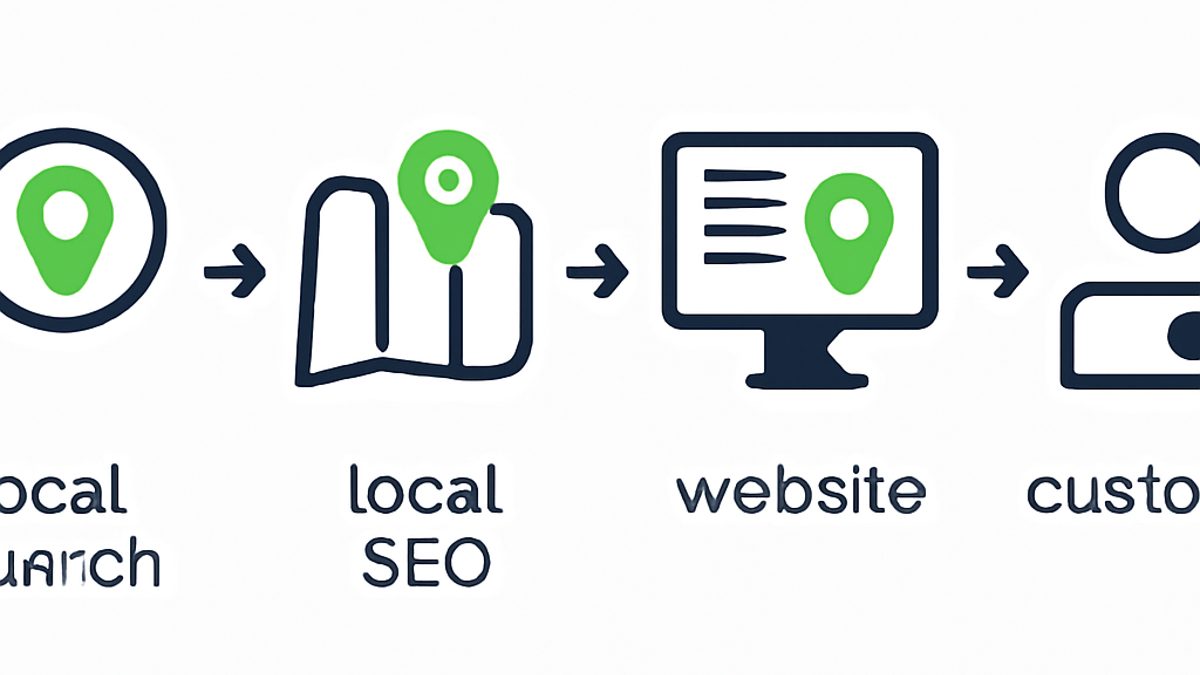
Local search is crucial because it directly connects businesses with high-intent consumers who are ready to make a purchase or engage with a service in their immediate vicinity. A significant portion of all online searches has local intent, driving immediate action and directly impacting a business's bottom line by facilitating discovery and engagement at the critical moment of need.
The landscape of consumer behavior has dramatically shifted, with mobile devices now central to local discovery. According to Google, "near me" searches have grown significantly, indicating a strong preference for local solutions. When someone searches for "coffee shop near me" or "plumber in [city name]," they are often looking to act quickly. Businesses that rank well in these local searches capture this immediate demand, translating into phone calls, walk-ins, and online inquiries. Missing out on local search visibility means ceding valuable, high-conversion traffic to competitors. It's not just about visibility, but about capturing market share where it matters most: in your own backyard.
How Does Local Search Differ from General SEO?
Local Search Optimization (Local SEO) is a subset of general Search Engine Optimization (SEO), primarily distinguished by its explicit focus on geographic targeting and the optimization of a Google Business Profile. While general SEO aims for broad organic visibility, Local SEO prioritizes ranking for queries that include location-specific keywords or imply local intent, often appearing in the "local pack" or Google Maps results.
The fundamental difference lies in the intent of the searcher and the ranking factors involved. General SEO focuses on broad keywords, website authority, backlinks, and content relevance for a global audience. Local SEO, however, places heavy emphasis on proximity (how close the searcher is to the business), prominence (how well-known and authoritative the business is locally), and relevance (how well the business matches the searcher's query). Key elements unique to local search include optimizing your Google Business Profile, managing online reviews, ensuring NAP (Name, Address, Phone) consistency across local directories, and building geo-specific content. These factors are critical for appearing in the coveted Google Maps and local pack results, which are distinct from the traditional organic search results.
Comparison: General SEO vs. Local SEO
To better illustrate the distinctions, here's a direct comparison:
| Feature | General SEO | Local SEO |
|---|---|---|
| Primary Goal | Rank nationally/globally for broad keywords. | Rank locally for geo-specific keywords and "near me" searches. |
| Target Audience | Wider, non-location-specific audience. | Customers in a specific geographic area. |
| Key Platform Focus | Google Search (organic results). | Google Business Profile, Google Maps, local pack. |
| Primary Ranking Factors | Keyword relevance, backlinks, content quality, site speed, mobile-friendliness. | GBP optimization, NAP consistency, local reviews, proximity, local citations, relevance. |
| Content Strategy | Broad topics, evergreen content, thought leadership. | Location-specific pages, community events, local news, localized service descriptions. |
| Measurement | Organic traffic, keyword rankings, conversion rates. | Local pack rankings, Google Maps visibility, phone calls, direction requests, review volume/sentiment. |
What Are the Core Components of a Successful Local Search Strategy?
A successful local search strategy integrates several key components: a fully optimized Google Business Profile, consistent NAP information across online directories, proactive review management, and a locally optimized website with relevant content and technical foundations. These elements work in concert to signal relevance and authority to search engines, ensuring local discoverability.
To truly dominate local search, you need a holistic approach. Here are the essential components:
- Google Business Profile (GBP) Optimization: This is the cornerstone of local SEO. A complete and regularly updated GBP listing with accurate business information, services, products, photos, and hours is paramount. Optimizing categories, writing compelling descriptions, and utilizing GBP Posts are crucial. For a deeper dive, read our guide on GBP Optimization for Local SEO.
- Local Citations and NAP Consistency: Citations are mentions of your business's Name, Address, and Phone number across various online directories (Yelp, Yellow Pages, industry-specific sites). Ensuring NAP consistency is vital, as discrepancies can confuse search engines and dilute your authority. Aim for 20+ high-quality, relevant directory citations.
- Local Reviews and Reputation Management: Reviews are powerful social proof and a significant local ranking factor. Actively encouraging customers to leave reviews, responding promptly to all feedback (positive and negative), and managing your overall online reputation builds trust with both potential customers and search engines.
- On-Page Local SEO: Your website needs to reflect your local focus. This includes optimizing title tags, meta descriptions, header tags, and website content with local keywords (e.g., "plumber in Dallas," "best Italian restaurant Austin"). Create dedicated service pages and location pages if you serve multiple areas.
- Local Link Building: Acquiring backlinks from other reputable local businesses, community organizations, or local news sites can significantly boost your local authority. Think sponsorships, partnerships, or local resource guides. Learn more in our Local Link Building Tips.
- Geo-Specific Content: Beyond just keywords, create valuable content that resonates with your local audience. Blog posts about local events, guides to local attractions, or spotlights on community issues can attract local interest and demonstrate local relevance to search engines.
- Technical SEO for Local: Ensure your website is fast (e.g., INP under 200ms, LCP under 2.5s), mobile-friendly, and uses schema markup (specifically LocalBusiness schema from Schema.org) to help search engines understand your local business information.
- Local Rank Tracking and Analytics: Monitoring your performance is non-negotiable. Tools like ProMapRanker provide geo-grid scans, offering a visual heatmap of your rankings across a specific area, perhaps a 5x5 grid at 1-mile increments. This helps you understand your Share of Local Voice (SoLV) and Average Rank Position (ARP) to identify areas for improvement. Our Local Rank Tracker helps you stay ahead.
How Do Local Search Engines Rank Businesses?
Local search engines, primarily Google, rank businesses based on three core factors: Relevance, Proximity, and Prominence. Relevance determines how well a business matches the search query, Proximity measures its distance to the searcher, and Prominence assesses its overall online authority and reputation, including reviews and local citations.
Google's algorithm for local rankings is complex, but these three pillars, as outlined by Google Search Central https://developers.google.com/search/docs/fundamentals/local-seo, provide a clear framework:
- Relevance: How well does your Google Business Profile match what someone is searching for? Make sure your GBP categories, services, and description accurately reflect your offerings. If a user searches for "vegan bakery," a bakery explicitly categorized as "vegan" will be more relevant than one simply listed as "bakery."
- Proximity: How close is your business to the searcher? Google uses the searcher's location (or the location specified in the query, like "pizza near downtown") to determine which businesses are most convenient. This is why geo-grid rank tracking (e.g., a 5x5 grid at 5 miles) is so vital, as rankings can fluctuate significantly based on the searcher's exact point on the map.
- Prominence: How well-known and authoritative is your business? This includes factors like the number and quality of reviews, your overall online reputation, local citations from authoritative directories, and the strength of your website's SEO. A business with hundreds of positive reviews and a strong local link profile will generally be considered more prominent than a brand new business with no online presence.
Understanding these factors is key to optimizing for the Map Pack Ranking Factors and ensuring your business appears when local customers are searching.
Practical Steps to Dominate Your Local Search Market
To dominate your local search market, consistently optimize your Google Business Profile, actively solicit and respond to customer reviews, ensure NAP consistency across all online directories, and create geo-specific content for your website. Regular monitoring with a geo-grid rank tracker is also essential to identify and address ranking fluctuations.
Here's a practical, step-by-step checklist to guide your local search efforts:
- Claim and Fully Optimize Your Google Business Profile:
- Claim and verify your GBP.
- Fill out every section completely: business name, address, phone, website, hours, description, categories (primary and secondary).
- Upload high-quality photos and videos of your business, products, and team (at least 5-10 photos).
- Use GBP Posts regularly to share updates, offers, and events.
- Add your services and products with descriptions and pricing.
Pro-tip: Regularly review your GBP Insights to understand how customers are finding and interacting with your listing.
- Build and Maintain Consistent Local Citations:
- Identify key local directories relevant to your industry (e.g., Yelp, Yellow Pages, TripAdvisor, Healthgrades, industry-specific sites).
- Ensure your Name, Address, and Phone (NAP) information is identical across all listings, down to abbreviations and suite numbers.
- Use a citation management tool to automate this process and find new opportunities.
- Aim for 20-50 high-quality citations, prioritizing those with strong domain authority.
- Actively Generate and Manage Customer Reviews:
- Implement a strategy to encourage happy customers to leave reviews on Google, Yelp, and other relevant platforms.
- Always respond to reviews, both positive and negative, within 24-48 hours. Thank positive reviewers and professionally address concerns from negative ones.
- Never pay for reviews or coerce customers; Google's guidelines are strict.
- Monitor review sentiment to identify areas for business improvement.
- Optimize Your Website for Local Searches:
- Create dedicated "location pages" if you serve multiple areas, each with unique, locally relevant content.
- Embed a Google Map on your contact page, showing your business location.
- Ensure your NAP information is prominently displayed on your website, ideally in the footer and contact page.
- Optimize title tags, meta descriptions, and header tags with local keywords and service terms.
- Implement LocalBusiness schema markup on your website to provide structured data to search engines.
- Ensure your website is mobile-responsive and loads quickly (check Core Web Vitals at web.dev/vitals).
- Monitor and Analyze Your Local Search Performance:
- Use a dedicated local rank tracker like ProMapRanker to perform geo-grid scans. This visual heatmap shows your rankings for specific keywords from multiple points across your service area (e.g., a 7x7 grid at 2-mile increments).
- Track key metrics such as Share of Local Voice (SoLV), Average Rank Position (ARP), Google Maps visibility, and direction requests.
- Regularly audit your Google Business Profile for completeness and accuracy. ProMapRanker offers a free GBP audit to help you identify gaps.
- Adjust your strategy based on performance data. If you see weak spots in your geo-grid, focus your optimization efforts on those areas.
Is Paid Local Search (Local PPC) Better Than Organic Local SEO?
Neither local PPC nor organic local SEO is inherently "better"; rather, they serve different purposes and often achieve the best results when used in conjunction. Local PPC (Pay-Per-Click) offers immediate, highly targeted visibility for specific local queries, while organic local SEO builds sustainable, long-term visibility and authority without direct per-click costs.
Local PPC campaigns, often run through Google Ads, allow businesses to bid on local keywords (e.g., "emergency plumber Houston") and appear at the very top of search results, sometimes even above the local pack. This provides instant traffic and leads, making it ideal for new businesses, promotions, or situations requiring immediate exposure. However, once your budget runs out, your visibility disappears.
Organic local SEO, on the other hand, is a long-term investment. It takes time and consistent effort to build rankings, but once achieved, these rankings can provide a steady stream of traffic and leads without the ongoing per-click cost of PPC. Organic local SEO also builds trust and authority, as users often perceive organic results as more credible. For optimal results, a hybrid approach is often best: use local PPC for immediate impact and to test keywords, while simultaneously investing in organic local SEO for sustainable growth and brand building.
What Role Do Local Search Tools Play in the Industry?
Local search tools are indispensable for efficiently managing, optimizing, and tracking a business's local online presence across various platforms. They streamline tasks like Google Business Profile management, citation building, review monitoring, and most importantly, provide precise local rank tracking, offering actionable insights to improve visibility.
The complexity of local search, with its numerous ranking factors and the need for constant monitoring, makes specialized tools essential. Here's how they contribute:
- Google Business Profile Management: Tools help manage multiple GBP listings, schedule posts, and respond to reviews more efficiently, ensuring profiles are always up-to-date and engaging.
- Citation Building and NAP Consistency: These tools automate the process of submitting business information to hundreds of directories and identify inconsistencies that could harm local rankings.
- Review Management: They consolidate reviews from various platforms, provide templates for responses, and help solicit new reviews, which is critical for local prominence.
- Local Rank Tracking: This is where tools like ProMapRanker truly shine. Traditional rank trackers show a single rank for a keyword. ProMapRanker's geo-grid rank tracking provides a visual heatmap, showing your business's ranking for specific keywords from multiple search points across a defined geographic area. This reveals where you are strong and where you need improvement, giving you a comprehensive understanding of your Share of Local Voice (SoLV) and Average Rank Position (ARP).
- Competitive Analysis: Many tools allow you to track competitor performance, helping you identify their strengths and weaknesses in the local search landscape.
- Auditing and Reporting: Tools offer detailed audits of your local SEO health, including GBP audits, website analysis, and comprehensive performance reports. ProMapRanker's free GBP audit is a great starting point for any business.
By leveraging these tools, businesses can save time, gain deeper insights, and make data-driven decisions to outrank their local competitors. Ready to see your local rankings with precision? Start your ProMapRanker journey today and transform your local search strategy.
The Future of the Local Search Industry
The future of the local search industry will be shaped by advancements in artificial intelligence, increasing reliance on voice search, the integration of augmented reality, and even more hyper-personalized search results based on user behavior and real-time context. Businesses must adapt by focusing on comprehensive digital presence, conversational AI, and rich, structured data.
We are already seeing AI play a more significant role in how search engines interpret intent and deliver results. This means businesses will need to focus on providing clear, unambiguous information across all platforms. Voice search will continue to grow, necessitating more natural language optimization and answering direct questions. Augmented reality, though still emerging, holds potential for overlaying business information onto real-world views. Furthermore, personalized search results will become even more granular, requiring businesses to not only optimize for their location but also for niche customer segments and individual user preferences. Staying ahead will require continuous learning, adaptation, and leveraging advanced AI-powered tools like ProMapRanker's AI rank tracking capabilities to understand and predict ranking shifts.
Frequently Asked Questions
Is PPC better than SEO for local businesses?
Neither PPC nor SEO is definitively "better" for local businesses; they are complementary strategies. Local PPC offers immediate visibility and traffic for specific queries, ideal for quick results or promotions. Local SEO builds sustainable, long-term organic visibility and trust over time. Most successful local businesses use a combination of both to maximize their online presence and capture both immediate and sustained customer engagement.
What does "LocalSearch" refer to in the industry?
"LocalSearch" generally refers to the act of consumers looking for businesses, products, or services within a specific geographic area, often using terms like "near me" or including a city/neighborhood name. It also encapsulates the broader industry dedicated to optimizing businesses for these location-based queries across platforms like Google Maps, local directories, and search engines, rather than referring to a specific company or tool.
What is the main difference between Local SEO and general SEO?
The main difference between Local SEO and general SEO lies in their geographic targeting. Local SEO specifically aims to improve a business's visibility for searches with local intent, primarily focusing on a Google Business Profile, local citations, and proximity. General SEO, in contrast, targets broader, non-location-specific keywords to achieve national or global visibility, emphasizing website authority, backlinks, and comprehensive content for a wider audience.
How does ProMapRanker help businesses in the local search industry?
ProMapRanker empowers businesses by providing unparalleled visibility into their local search performance through precise geo-grid rank tracking. Our tools offer a visual heatmap of rankings from multiple points across a service area, allowing businesses to understand their Share of Local Voice (SoLV) and Average Rank Position (ARP). We also offer comprehensive Google Business Profile audits and AI-powered rank tracking to help businesses identify optimization opportunities and stay ahead of competitors, ensuring they capture more local customers.
What is NAP consistency and why is it important?
NAP consistency refers to ensuring that your business's Name, Address, and Phone number are identical across all online platforms, including your Google Business Profile, website, and various local directories. It is crucial because discrepancies can confuse search engines, making it harder for them to verify your business's legitimacy and location, which can negatively impact your local search rankings and overall online prominence.
How often should I audit my Google Business Profile?
You should audit your Google Business Profile at least once a quarter, or more frequently if there are significant changes to your business (e.g., new services, updated hours, new photos) or if you notice a drop in local rankings. Regular audits ensure your information remains accurate, categories are optimized, new features are utilized, and responses to reviews are current, all of which are vital for maintaining strong local search performance. ProMapRanker offers a free GBP audit to help you start.
See where you really rank - block by block
ProMapRanker scans Google Maps across a grid of your service area. Simple monthly plans from $19, white-label on every plan.
Start freeKeep reading
 gemini vs chatgpt local
Gemini vs ChatGPT for Local Recommendations: Who Wins?
Gemini vs ChatGPT for local business recommendations: how they differ in sources, accuracy, and bias.
Read → google my business categories
Google My Business Categories: How to Choose the Right Ones
How to choose the right Google My Business categories to maximize relevance and rankings.
Read → local seo importance
Local SEO Importance: A Complete Guide
Everything you need to know about local seo importance: what it is, why it matters for local SEO, and exactly how to act on it.
Read →